



What's Happening?
Botswana has announced a series of prohibitions following the discovery of suspected foot-and-mouth disease (FMD) cases in the Masunga District. The Ministry of Lands and Agriculture (MoLA) has issued a statement prohibiting the movement of cloven-hoofed
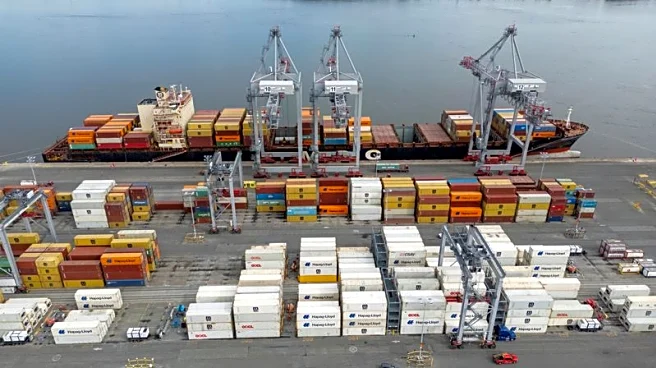
animals and their products between disease control zones (DCZs) to prevent the spread of FMD. The measures include a ban on the export and import of cloven-hoofed animals and their fresh products, while allowing the importation of processed products like pasteurized milk. Botswana maintains 14 main DCZs, with 11 officially free of FMD and three classified as endemic areas. The country has heightened its alert following confirmed FMD cases in Zimbabwe's Mangwe District, which borders Botswana. The movement restrictions are part of Botswana's efforts to protect its FMD-free status, crucial for its livestock industry.
Why It's Important?
The measures taken by Botswana are significant as they aim to protect the country's livestock industry, which is a major economic sector. Red meat, primarily beef, is Botswana's second-largest export commodity after diamonds, with exports valued at approximately $23.73 million in 2023. The restrictions could impact trade with key markets, including the European Union, Norway, and neighboring African countries. The movement ban is crucial to prevent the spread of FMD, which could have severe economic consequences if it affects the country's cattle herd, estimated between 1.1 million to 1.7 million head. The situation underscores the importance of disease control in maintaining international trade relationships and economic stability.
What's Next?
Botswana's Ministry of Lands and Agriculture will continue investigations into the suspected FMD cases. Livestock owners are urged to remain vigilant and report any signs of illness. The government may adjust the restrictions based on the investigation outcomes. The situation requires close monitoring, as any confirmed outbreak could lead to extended trade restrictions and economic repercussions. Neighboring countries, particularly those with trade ties to Botswana, will likely watch developments closely, as the spread of FMD could affect regional livestock trade dynamics.