




What's Happening?
A recent discussion by Jacksonville Transportation Authority (JTA) interim CEO Cleveland Ferguson regarding the agency's tolling authority has generated significant pushback from Jacksonville residents and Mayor Donna Deegan. During a City Council's Financial
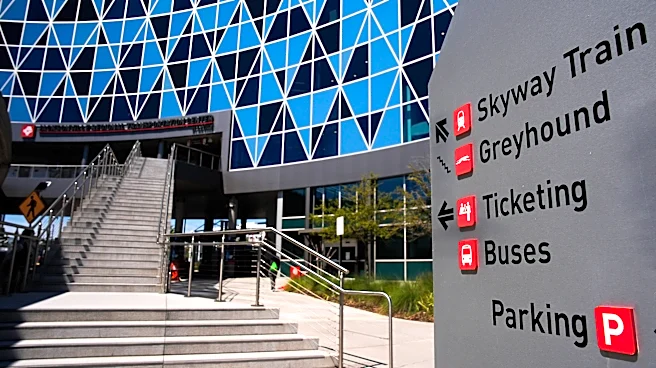
Oversight and Audit Select Committee meeting, Ferguson mentioned JTA's statutory authority to collect tolls, referencing a hypothetical project involving a private partner and an existing JTA asset like the Skyway to generate revenue. This statement comes amidst JTA's efforts to address a nearly $40 million budget shortfall and recent layoffs of almost 200 employees. Despite the CEO's remarks, JTA has clarified that there is no active proposal or recommendation to reinstate tolls. The topic is particularly sensitive in Jacksonville, where tolls were used to fund bridge construction from the 1950s until their abolition in 1987, when voters opted for a half-cent sales tax instead.
Why It's Important?
The strong negative reaction to the mere mention of tolls highlights a deep-seated public sentiment against such fees in Jacksonville. For residents like Regina Wright and Margarita Diaz-Hernandez, the prospect of new tolls adds to existing financial burdens, making it a significant affordability concern. Mayor Donna Deegan's swift and unequivocal opposition underscores the political sensitivity of the issue, indicating that any move to reintroduce tolls would face considerable governmental and public resistance. This situation reflects a broader challenge for public transportation authorities nationwide: how to secure funding for infrastructure and operations without imposing unpopular taxes or fees on the populace. The historical context of tolls being replaced by a sales tax further complicates the matter, as it suggests a public preference for broader-based funding mechanisms over direct user fees for infrastructure.
What's Next?
Following the public outcry and Mayor Deegan's firm stance, JTA has clarified that it has no active plans to reinstate tolls. The agency is currently engaged in a series of five scheduled meetings with Jacksonville's Financial Audit and Oversight Select Committee to address its budget shortfall. These meetings will likely focus on exploring alternative solutions to the financial crisis, given the clear public and political opposition to tolls. JTA will need to identify other viable revenue streams or cost-saving measures to close its budget gap. The situation also sets a precedent for future discussions on infrastructure funding in Jacksonville, signaling that any proposals involving tolls will face immediate and strong opposition from both the community and local leadership.
Beyond the Headlines
This incident reveals the delicate balance between public service funding and public acceptance. While JTA possesses the legal authority to implement tolls, the political and social capital required to do so appears to be non-existent in Jacksonville. The historical memory of past tolls and their replacement by a sales tax indicates a community that has already made a collective decision on how it prefers to fund public services. The immediate and unified opposition from residents and the mayor suggests that public trust and political will are critical factors in the feasibility of such financial mechanisms. This scenario could influence how other U.S. cities with similar historical contexts approach funding challenges for their transportation infrastructure, emphasizing the need for transparent communication and community engagement in financial planning.