



What's Happening?
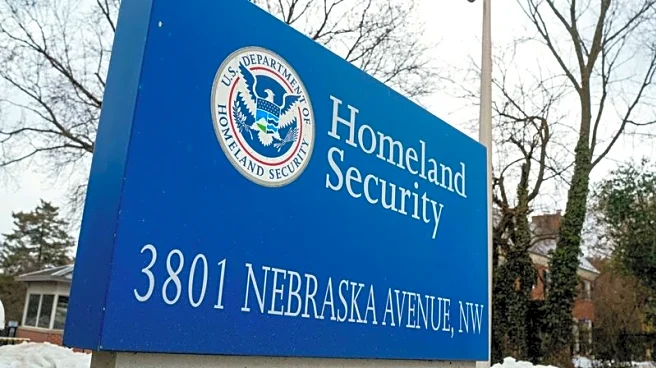
A federal judge in Maryland has issued a temporary restraining order to halt the construction of an Immigration and Customs Enforcement (ICE) detention center in Williamsport, Maryland. The decision comes after Maryland Attorney General Anthony G. Brown
filed an emergency motion citing the lack of required environmental impact studies. The facility, intended to house up to 1,500 detainees, was set to begin operations next month. The state argued that the federal government had not conducted necessary environmental assessments and had proceeded without public input or state consultation. U.S. District Judge Brendan A. Hurson, in his ruling, noted that the Department of Homeland Security (DHS) and ICE likely failed to comply with the National Environmental Policy Act, raising concerns about potential public health hazards and environmental harm due to inadequate infrastructure.
Why It's Important?
The ruling underscores the importance of environmental compliance in federal projects, particularly those involving large-scale facilities like detention centers. The decision highlights the tension between state and federal authorities over immigration policies and environmental regulations. For Maryland, the ruling is seen as a victory in protecting local ecosystems and public health from potential adverse effects of the facility. The case also reflects broader national debates on immigration enforcement and environmental stewardship, with implications for how similar projects might be approached in the future. The halt in construction could delay the federal government's plans to expand detention capacity, affecting immigration processing and deportation timelines.
What's Next?
The temporary restraining order is set for 14 days, during which further legal proceedings will determine the project's future. Maryland is likely to continue its legal challenge to ensure compliance with environmental laws. The federal government may appeal the decision or conduct the necessary environmental assessments to resume construction. Stakeholders, including local communities and environmental groups, will likely remain engaged in the process, advocating for transparency and adherence to legal standards. The outcome could set a precedent for how environmental concerns are addressed in federal immigration projects.