
What's Happening?
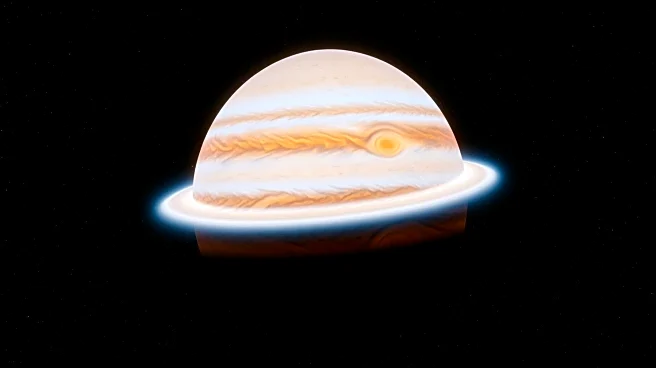
NASA has outlined a series of notable astronomical events for 2026, offering skywatchers numerous opportunities to observe celestial phenomena. Key events include a planetary parade on February 28, where
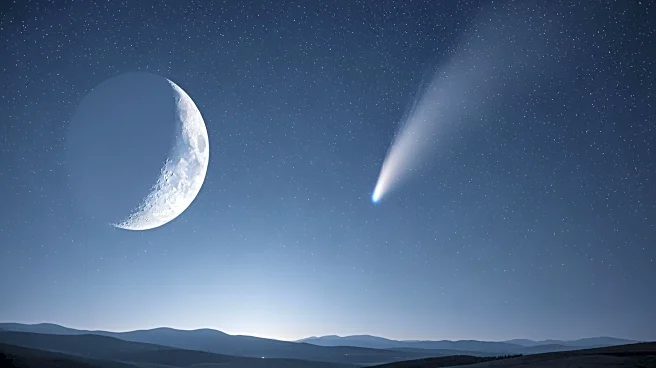
six planets will be visible shortly after sunset, and a total lunar eclipse on March 3, particularly visible from North America. The year will also feature a rare Blue Moon on May 31, a conjunction of Venus and Jupiter in June, and the Perseids and Geminids meteor showers in August and December, respectively. These events are part of a broader calendar that includes supermoons, solar eclipses, and other meteor showers, providing a rich schedule for astronomy enthusiasts.
Why It's Important?
These astronomical events offer significant opportunities for public engagement with science and space exploration. They serve as educational moments that can inspire interest in astronomy and related fields. For NASA, these events highlight the importance of its observational capabilities and the role of its facilities, such as the Marshall Space Flight Center, in advancing our understanding of space. The visibility of these events across different regions also underscores the global nature of space science, fostering international collaboration and interest in space exploration.
What's Next?
As these events unfold, NASA and other scientific organizations are likely to provide live coverage and educational resources to enhance public understanding and engagement. The visibility of these events may also lead to increased interest in amateur astronomy and participation in citizen science projects. Additionally, these events could influence future space missions and research priorities, as they provide data and insights into celestial mechanics and phenomena.