


What's Happening?
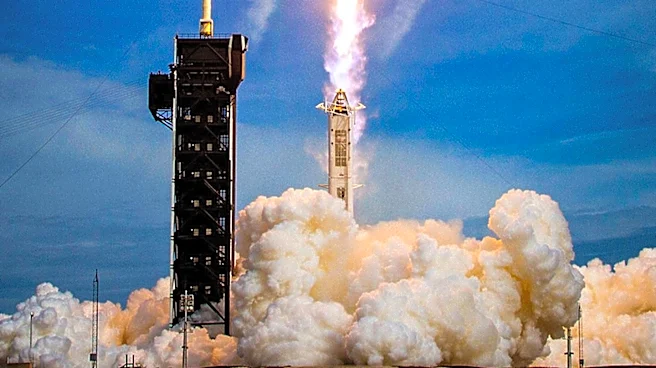
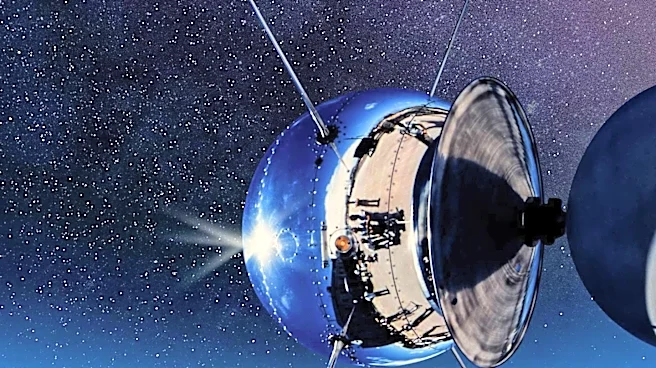
Japan's H3 rocket successfully launched the Michibiki 7 navigation satellite into orbit from the Tanegashima Space Center. This launch marks the ninth flight of the H3 rocket, which is the successor to Japan's H-2A rocket. Michibiki 7 is part of Japan's Quasi-Zenith
Satellite System (QZSS), designed to enhance navigation capabilities in the Asia-Oceania region. The satellite also carries a payload for the U.S. Space Force, the Situational Awareness Camera Hosted Instrument (SACHI), developed by MIT Lincoln Laboratory.
Why It's Important?
The successful launch of Michibiki 7 is a significant step in expanding Japan's QZSS, which aims to improve regional navigation services. This system is compatible with GPS and enhances positioning accuracy, benefiting various sectors such as transportation, agriculture, and disaster management. The inclusion of a U.S. payload highlights international collaboration in space technology and defense. The launch demonstrates Japan's growing capabilities in space exploration and its commitment to advancing satellite technology.
What's Next?
Japan plans to continue expanding the QZSS network, with a goal of deploying 11 satellites in total. The data from Michibiki 7 will be integrated with existing systems to enhance navigation services. The collaboration with the U.S. Space Force may lead to further joint projects, strengthening international partnerships in space technology. Future launches will focus on increasing the coverage and capabilities of the QZSS, supporting both civilian and military applications.