






What's Happening?
Secretary of State Marco Rubio announced that starting in 2027, Americans will be able to apply for their first passport entirely online through America.gov, with Login.gov serving as the authentication service. This initiative aims to streamline the application
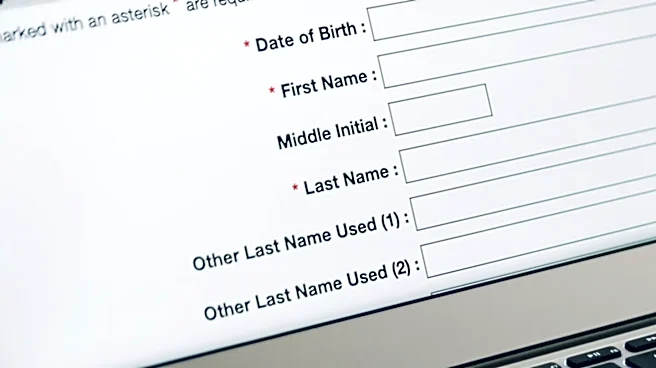
process, eliminating the need for in-person visits, printing forms, or physical photos. The goal is for the vast majority of Americans to be able to apply for a passport or passport card online by the end of 2027. The process, as demonstrated, involves signing in with Login.gov, reviewing pre-filled government information, taking or uploading a photo via phone, making payments, and tracking delivery. Executive Order 14432, signed concurrently, mandates Login.gov's integration with America.gov. While the convenience is highlighted, key details regarding eligibility rules, the required identity verification level, and remote proof of citizenship checks are yet to be released by the State Department. Currently, first-time passport applications necessitate an in-person visit to verify identity and citizenship documents.
Why It's Important?
This shift to online first-time passport applications represents a significant modernization of a critical government service, potentially saving millions of Americans time and effort. The passport is considered the most trusted U.S. identity document, and moving its initial issuance online introduces new challenges and considerations for identity verification. The current in-person requirement serves as a crucial fraud control mechanism, ensuring the applicant's identity and citizenship are accurately established. Transitioning this process to a remote, software-based system necessitates robust digital identity verification to prevent fraud, which could have far-reaching implications if compromised. A fraudulent passport can enable various illicit activities, impacting national security and the integrity of identity systems. The success of this initiative hinges on the State Department's ability to implement secure and transparent remote identity checks, balancing convenience with stringent security measures. The move also highlights the increasing reliance on digital platforms for government services and the evolving landscape of identity management in the digital age.
What's Next?
The State Department is expected to release further details regarding eligibility rules, the specific identity verification level required, and how proof of citizenship will be remotely checked before the 2027 launch. Key questions remain about how the system will resist sophisticated fraud techniques like deepfakes and injection attacks during selfie checks, and how accounts will be protected post-sign-up, particularly against phishing-resistant methods. The public will also be looking for transparency regarding the independent testing of liveness detection and injection resistance. A privacy impact assessment for America.gov is anticipated to be published before the launch, addressing concerns about data handling for sensitive passport applications. Applicants planning to use the online service are advised to use official government websites (america.gov, login.gov, travel.state.gov) directly, secure their Login.gov accounts with strong authentication methods, and be wary of third-party services or scams. The effectiveness of this new system will largely depend on the State Department's ability to address these security and transparency concerns proactively.
Beyond the Headlines
The transition to online first-time passport applications underscores a broader societal shift towards digital identity and remote verification, raising ethical and legal questions about data privacy, security, and equitable access. While offering convenience, the move centralizes sensitive personal data, making it a more attractive target for cybercriminals. The challenge lies in designing a system that is both accessible and highly secure, especially for a document as critical as a passport. The reliance on Login.gov and its underlying verification services, including the use of AI for face matching and liveness detection, highlights the increasing integration of advanced technology into government functions. This development could set a precedent for other high-stakes identity verification processes in the U.S., potentially influencing future policies on digital identity. The need for public trust and transparency in how these systems operate, particularly concerning the handling of biometric data and the prevention of identity theft, will be paramount in shaping public acceptance and the long-term success of such initiatives.