
What's Happening?
The United Kingdom is encountering substantial difficulties in its commitment to deliver the SSN-AUKUS nuclear-powered attack submarines on schedule, a key component of the AUKUS Pillar 1 agreement. The public
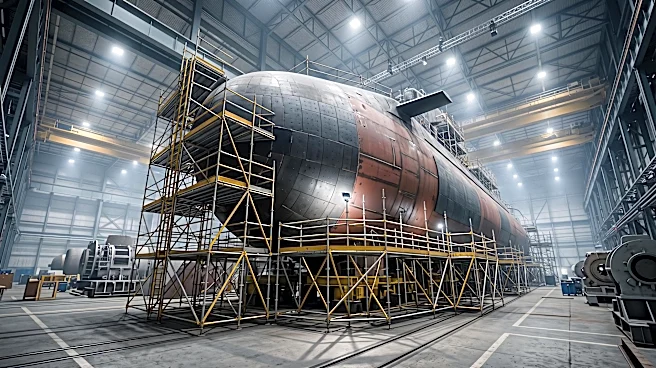
relations narrative suggesting a seamless transition from current submarine programs to the new 10,000-tonne SSN-AUKUS is reportedly disconnected from the industrial realities at BAE Systems’ shipyard in Barrow-in-Furness. Issues include physical space constraints within the Devonshire Dock Hall, where existing Astute and Dreadnought class submarines occupy the primary manufacturing bays. The HMS Agamemnon, an Astute-class submarine, took 13 years and two months to leave the dock, indicating a broader pattern of delays. Furthermore, the detailed design for SSN-AUKUS, funded by a £3.95 billion contract, is still underway, making claims of steel cutting in 2027 premature for operational warships.
Why It's Important?
The delays and industrial bottlenecks in the UK's SSN-AUKUS program have significant implications for the U.S. and its allies, particularly Australia, which is heavily relying on this agreement for its strategic future. The AUKUS pact is a cornerstone of Indo-Pacific security, and any failure to deliver on time could create a critical capability gap for Australia, impacting regional stability and the collective defense posture against potential adversaries. For the U.S., these delays could necessitate adjustments in strategic planning and resource allocation to compensate for the shortfall. It also highlights the challenges of complex international defense collaborations and the need for realistic assessments of industrial capacities. The situation underscores the interconnectedness of allied defense industrial bases and the potential for one nation's production issues to ripple through a broader alliance.
What's Next?
The UK's Ministry of Defence faces a multi-billion-pound budget shortfall and a 'NATO-first' strategic posture, prioritizing European defense. This could further strain resources for the SSN-AUKUS program, which is designed to project power into the Indo-Pacific. To address the physical bottlenecks, BAE Systems plans to use an 18-acre former gas site at Ramsden Dock for hull cylinder manufacturing, but this site requires extensive development. Additionally, the nuclear supply chain at Raynesway, Derby, where Rolls-Royce Submarines manufactures reactor cores, is also facing severe industrial queues and a shortage of specialized welding technicians. The UK government has established 'Team Barrow' with a £200 million regeneration fund, but this is acknowledged to be insufficient for the required infrastructure upgrades, including housing for the expanded workforce. Washington, London, and Canberra may need to reappraise the program's timeline and feasibility.
Beyond the Headlines
Beyond the immediate defense implications, the challenges faced by the UK in delivering the SSN-AUKUS submarines highlight deeper issues concerning industrial resilience, workforce development, and the long-term sustainability of complex defense projects. The reliance on a fiscally constrained industrial base, coupled with a shortage of specialized labor and inadequate civil infrastructure, points to systemic vulnerabilities that could affect other high-tech manufacturing sectors. This situation also raises questions about the balance between political ambition and industrial reality in international agreements. The ethical dimension involves the responsibility of allied nations to ensure that defense commitments are not made without a clear and achievable industrial plan, avoiding potential strategic vulnerabilities for partners. The long-term shift could be towards more localized and diversified defense manufacturing capabilities among allies to mitigate single-point-of-failure risks.