





What's Happening?
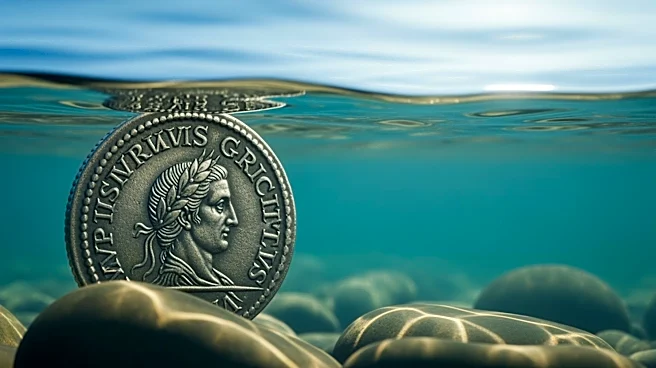
Divers exploring Lake Neuchâtel in Switzerland have uncovered a significant Roman treasure trove, consisting of over 1,000 objects dating back to between 20 and 50 AD. Initially mistaken for potential World War II explosives, the discovery includes ceramic
plates, bowls, and storage containers, many of which are remarkably well-preserved. The find was initially kept secret to prevent looting, but it is now being studied to provide insights into early Roman Empire trade practices. The objects, believed to be part of a shipment intended for Roman troops, include items such as swords and daggers, suggesting a military escort. The lake's conditions have preserved even organic materials like a wicker basket, which is rare for artifacts of this age.
Why It's Important?
This discovery is significant as it offers a rare glimpse into the trade and military logistics of the early Roman Empire. The preservation of the artifacts, including organic materials, provides archaeologists with valuable data on the types of goods transported and the methods used. The find could enhance understanding of Roman military supply chains and the economic interactions between Roman territories. The potential for new historical insights makes this an important archaeological event, with implications for historians and scholars studying ancient trade and military history.
What's Next?
The artifacts are currently being cleaned and studied to uncover more details, such as maker's marks and packing methods. The Octopus Foundation plans to release a book and documentary in 2027, and an exhibition is expected at the Laténium Museum in Neuchâtel. These efforts aim to make the findings accessible to the public and further academic research. The ongoing analysis may reveal more about the Roman Empire's reach and influence in the region.