






What's Happening?
Nearly 100 people have died from a cholera outbreak in Sudan's White Nile State in less than a month, with 2,700 individuals contracting the disease since February 20. Doctors Without Borders (MSF) reported that 92 deaths occurred within two weeks of
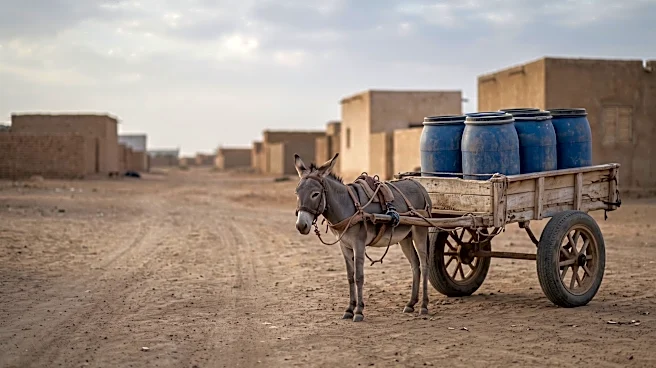
the outbreak's onset, including 18 children, five of whom were under the age of five. The outbreak peaked between February 20-24, overwhelming Kosti Teaching Hospital. MSF provided 25 tons of logistical supplies to help the hospital manage the influx of patients. The current wave of cholera was triggered by a mass power outage on February 16, caused by a projectile hitting the Rabak power plant during attacks by the Rapid Support Forces (RSF). This forced residents to rely on water transported by donkey carts, as water pumps became inoperable. The White Nile State Health Ministry has responded by providing clean water access and implementing a vaccination campaign.
Why It's Important?
The cholera outbreak in Sudan's White Nile State highlights the devastating humanitarian consequences of ongoing conflict and the vulnerability of critical infrastructure. The destruction of the Rabak power plant, leading to water supply disruptions, directly facilitated the spread of a deadly waterborne disease. This situation underscores how armed conflict exacerbates public health crises, particularly in regions already struggling with limited resources and displacement. The high mortality rate, especially among children, indicates a severe lack of access to clean water, sanitation, and timely medical care. The overwhelming of Kosti Teaching Hospital demonstrates the fragility of healthcare systems in conflict zones, where facilities are often ill-equipped to handle large-scale emergencies. The reliance on external aid organizations like MSF for basic medical supplies and infrastructure support further illustrates the profound impact of the conflict on the civilian population's well-being and survival.
What's Next?
The immediate focus will be on containing the cholera outbreak through continued provision of clean water, sanitation efforts, and vaccination campaigns. The White Nile State Health Ministry, supported by organizations like MSF, will likely intensify these measures to prevent further spread and reduce mortality. However, the ongoing insecurity and conflict in Sudan pose significant challenges to these efforts. Attacks on critical infrastructure, as seen with the Rabak power plant, could recur, leading to further disruptions in essential services. International humanitarian organizations will continue to advocate for unhindered access to affected populations and for the protection of civilians and civilian infrastructure. The long-term resolution of the conflict is crucial for establishing stable conditions necessary for sustainable public health interventions and preventing future outbreaks of this magnitude.
Beyond the Headlines
This cholera outbreak in Sudan reveals a deeper systemic issue: the weaponization or incidental destruction of essential services in conflict. The targeting of infrastructure like power plants has far-reaching consequences beyond immediate casualties, directly impacting public health and exacerbating humanitarian crises. It highlights the ethical imperative for all parties in a conflict to adhere to international humanitarian law, which protects civilian infrastructure. Furthermore, the reliance on donkey carts for water after the power outage points to a broader vulnerability in basic service provision in many developing regions, where modern infrastructure is either absent or easily disrupted. This situation also underscores the critical role of international aid organizations in filling gaps left by failing state structures during times of conflict, often operating under extreme duress and resource constraints. The long-term recovery from such outbreaks will require not only medical intervention but also significant investment in resilient infrastructure and peacebuilding efforts.