
What's Happening?
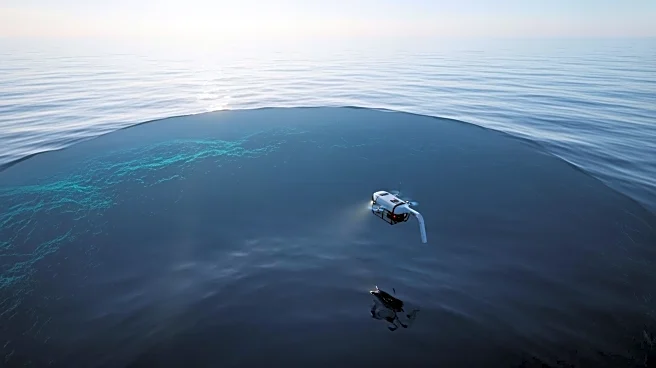
A renewed deep-sea search for Malaysia Airlines Flight 370 has commenced in the Indian Ocean, as announced by Malaysia's Transport Ministry. The search is being conducted by the vessel Armada 86 05, equipped
with two autonomous underwater vehicles. The exact location of the search area remains undisclosed. This operation marks a continuation of efforts to solve the mystery of the aircraft that disappeared over a decade ago with 239 people on board. The search is being carried out under a 'no-find, no-fee' agreement with Ocean Infinity, a Texas-based marine robotics firm. Ocean Infinity had previously conducted a search in 2018 without success but has since upgraded its technology and refined its analysis. The company has narrowed down the search zone to what it believes is the most probable crash site. Earlier this year, a brief search was conducted in a new area of the southern Indian Ocean but was halted due to poor weather conditions.
Why It's Important?
The renewed search for Flight MH370 is significant as it represents ongoing international efforts to resolve one of aviation's greatest mysteries. The disappearance of the aircraft has had profound implications for aviation safety and international search and rescue operations. The outcome of this search could provide closure to the families of the 239 passengers and crew members who have been waiting for answers since 2014. Additionally, the search could yield new insights into the capabilities and limitations of current search technologies, potentially influencing future search and rescue missions. The operation also highlights the challenges and complexities involved in deep-sea exploration and the importance of international cooperation in addressing such global issues.
What's Next?
If the search yields new findings, it could lead to further investigations and potentially a reevaluation of aviation safety protocols. The results of the search may prompt discussions among international aviation authorities regarding improvements in aircraft tracking and communication systems. Should the search be unsuccessful, it may lead to a reassessment of the search strategies and technologies used. The ongoing efforts may also influence future policies on how missing aircraft cases are handled globally, emphasizing the need for continued innovation in search and rescue technologies.