
What's Happening?
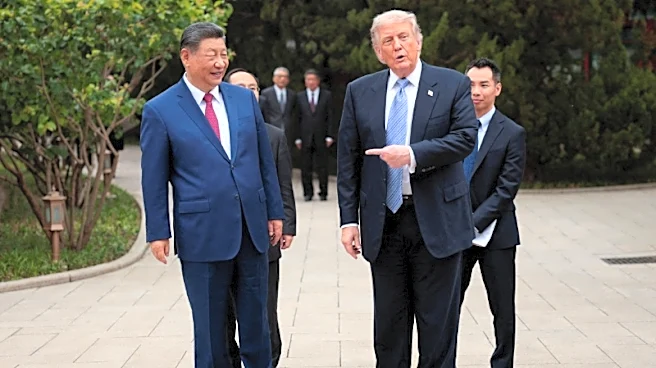
Artificial Intelligence (AI) has become a central topic in U.S.-China relations, as highlighted by President Trump's recent summit with Xi Jinping in Beijing. The discussions underscored the technological
arms race between the two nations, with AI being a pivotal element. The U.S. has seen a significant increase in AI's influence across various sectors, including national security, where AI tools are being integrated into cybersecurity measures. The technology's rapid advancement has led to widespread concerns about AI-driven layoffs and the potential for advanced hacking capabilities. Companies like Cisco have cited AI as a reason for workforce reductions, while the Trump administration considers regulatory measures to manage AI's impact. The proliferation of AI has also sparked debates over its role in economic and political spheres, with data centers becoming a contentious issue due to their resource demands.
Why It's Important?
The growing prominence of AI in U.S.-China relations and domestic affairs signifies a shift in global and national priorities. AI's integration into national security strategies highlights its potential to reshape defense mechanisms, while its economic implications are profound, affecting job markets and corporate strategies. The technology's influence extends to political discourse, with AI becoming a topic of debate in upcoming elections. The construction of data centers, essential for AI operations, has sparked local opposition due to environmental and resource concerns. This underscores the need for balanced policies that address AI's benefits and challenges, ensuring that technological advancements do not exacerbate social inequalities or environmental issues.
What's Next?
The U.S. government is considering testing or licensing powerful AI models before public release, a move aimed at mitigating potential risks associated with AI cyberattacks. This regulatory approach could set a precedent for AI governance, influencing international standards and practices. As AI continues to permeate various aspects of life, from education to finance, stakeholders across industries will need to adapt to its evolving role. The upcoming public offerings of major AI companies like Anthropic and OpenAI are expected to reshape investment landscapes, impacting individuals with savings or retirement plans. Policymakers, businesses, and civil society groups will need to navigate these changes, balancing innovation with ethical and societal considerations.
Beyond the Headlines
The ethical and cultural implications of AI's expansion are significant. The technology's ability to influence public opinion through deepfakes and automated content generation raises concerns about misinformation and trust in media. Additionally, the integration of AI into everyday life challenges traditional notions of employment and productivity, prompting discussions about the future of work and education. As AI becomes more embedded in societal structures, questions about privacy, data security, and human agency will become increasingly pertinent. The decisions made by tech companies and governments today will shape the trajectory of AI's impact on society, necessitating thoughtful and inclusive policy-making.