


What's Happening?
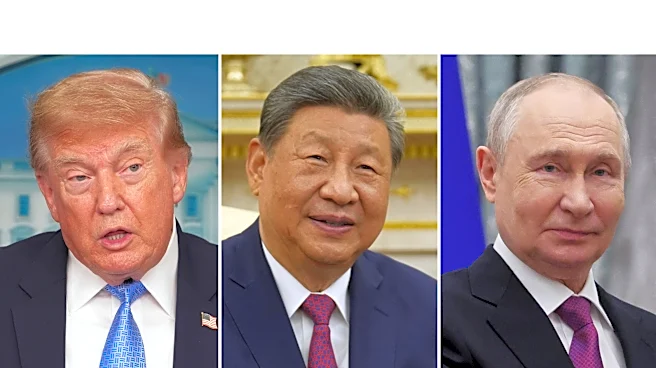
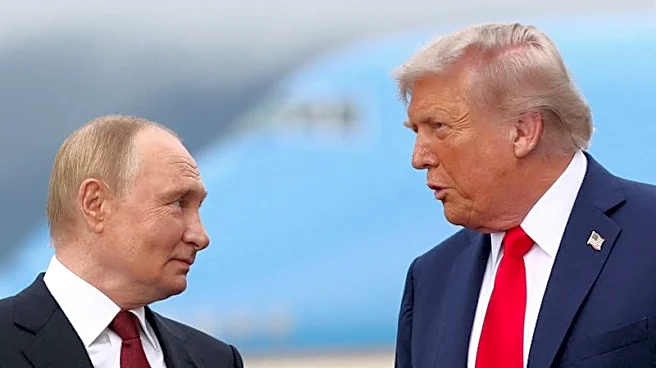
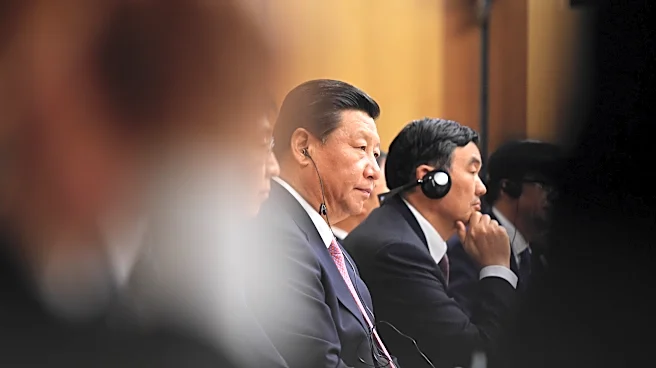
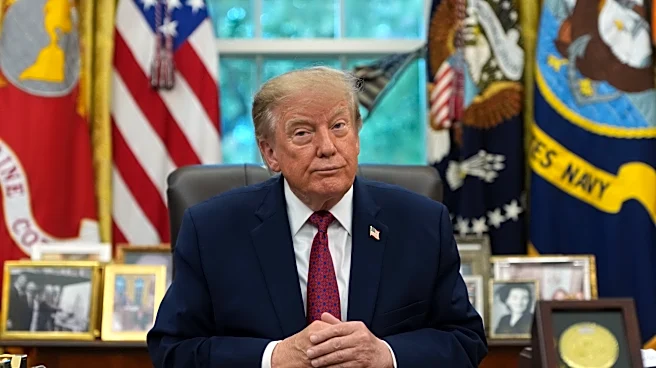
President Donald Trump is scheduled to arrive in China on November 18, 2026, for an Asia-Pacific Economic Cooperation (APEC) summit in Shenzhen. During his visit, President Trump is expected to participate in a three-way meeting with Russian President Vladimir
Putin and Chinese President Xi Jinping. The agenda for these high-level discussions is extensive, covering critical issues such as trade disputes, microchip technology, nuclear non-proliferation, and broader security concerns. This summit occurs amidst a perceived shift in the global power balance, with China asserting its growing strategic influence. According to Tong Zhao, a Senior Fellow at the Carnegie Endowment for International Peace, while expectations for immediate nuclear progress are low, an explicit commitment to regular, institutionalized nuclear dialogues could be meaningful. China views this engagement as an acknowledgment of its equal standing with the U.S. in global affairs, a perception reinforced by recent geopolitical developments.
Why It's Important?
This trilateral meeting signifies a critical juncture in international relations, particularly concerning the dynamics between the U.S., China, and Russia. China's perception of equality in its engagement with the U.S. suggests a potential recalibration of global power structures, where Beijing expects its core interests to be respected. The discussions on nuclear non-proliferation are especially vital, as both Russia and China possess significant nuclear capabilities, and their stances could profoundly impact global security. The summit also provides a platform for addressing ongoing trade tensions and technological competition, particularly regarding advanced microchips, which have become a flashpoint in U.S.-China relations. The outcomes of these talks could influence future diplomatic strategies, economic policies, and security frameworks, potentially leading to new agreements or further entrenching existing rivalries. The U.S. approach to these discussions will be closely scrutinized by allies and adversaries alike.
What's Next?
The APEC summit and the trilateral meeting are expected to set the tone for future interactions between these major global powers. While substantive breakthroughs on complex issues like nuclear arms control may not occur immediately, the establishment of regular dialogue mechanisms could be a key outcome. Discussions on non-proliferation might focus on areas of potential cooperation, such as the Iran nuclear issue, which could offer a pathway for shared interests. The summit will also likely influence the trajectory of trade relations and technological competition, with potential implications for global supply chains and innovation. Following APEC, a G20 summit in Miami from December 14-15 will provide another forum for leaders to engage, further testing the premise of China's perceived equality and the evolving dynamics of great-power competition. The diplomatic signals from Shenzhen will be crucial in shaping the international agenda for the coming months.
Beyond the Headlines
The trilateral meeting highlights a deeper shift in the international order, moving towards a more multipolar system where China and Russia increasingly assert their influence. China's insistence on 'equality' and 'reciprocity' in its relations with the U.S. reflects a strategic effort to reshape global governance norms, challenging the traditional U.S.-led order. This could lead to a more fragmented international system, where different powers champion alternative models of governance and economic integration. The reluctance of China and Russia to engage in comprehensive nuclear arms control talks, as noted by Tong Zhao, underscores their strategic priorities and their view of nuclear weapons as essential to their national interests. This stance could complicate efforts to reduce global nuclear risks and may necessitate new approaches to arms control that account for the evolving geopolitical landscape. The summit's outcomes will offer insights into the long-term trajectory of great-power competition and cooperation.