





What's Happening?
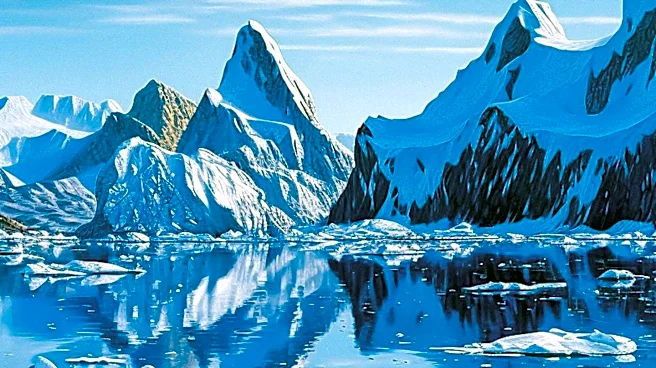
Antarctica, despite being the coldest place on Earth, is classified as a desert due to its low annual precipitation, which is less than that of the Sahara. The continent holds about 70% of the planet's fresh water, locked in an ice sheet averaging over
two kilometers thick. The South Pole receives less snow annually than Phoenix receives rain, with precipitation averaging under 80 millimeters of water equivalent. This paradoxical situation arises because cold air holds little moisture, resulting in minimal snowfall. The ice sheet, formed over millennia, compresses snow into solid glacial ice, preserving ancient atmospheric records. The continent's high plateau, averaging over 3,000 meters in elevation, contributes to its desert-like conditions.
Why It's Important?
Antarctica's status as a desert with vast fresh water reserves underscores the delicate balance of Earth's climate system. The ice sheet's stability is crucial for global sea levels, as its melting could significantly impact coastal regions worldwide. The continent's ice cores provide invaluable data for climate science, offering insights into historical atmospheric conditions and helping predict future climate trends. Understanding Antarctica's unique environment is essential for assessing the potential impacts of climate change, as warming temperatures could alter precipitation patterns and accelerate ice melt, leading to rising sea levels and global ecological shifts.