


What's Happening?
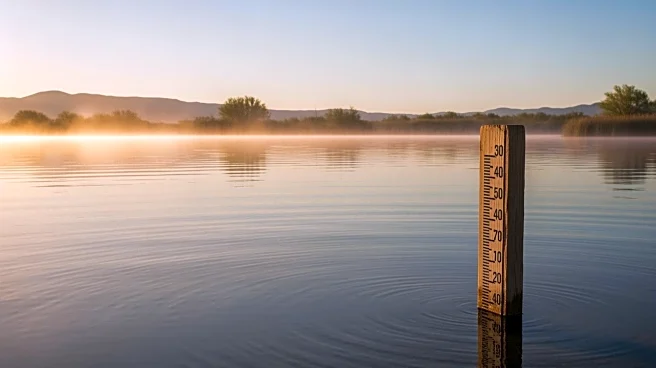
California water regulators are revisiting the issue of Mono Lake's water levels, which remain below the state-mandated target set in a 1994 decision. The State Water Resources Control Board has commissioned a study by UCLA climate scientists to understand
why the lake has not rebounded as expected. The study suggests that Los Angeles' use of water from creeks feeding Mono Lake is a significant factor, keeping the lake about 4 feet below its required level. The report indicates that halting L.A.'s water exports could double the likelihood of the lake reaching its target level within 20 years. The Los Angeles Department of Water and Power (DWP) has expressed the need for further review of the study's findings, citing the influence of precipitation, evaporation, and runoff on the lake's levels.
Why It's Important?
The situation at Mono Lake highlights the ongoing challenges of water management in California, particularly in balancing urban water needs with environmental conservation. The lake is a critical habitat for migratory birds and its health is vital for maintaining biodiversity. The debate over water use from the Mono Basin underscores the broader issue of sustainable water resource management in the face of climate change. If Los Angeles reduces its water intake from the basin, it could set a precedent for other regions facing similar environmental challenges. The decision could impact water availability for the city, potentially leading to increased reliance on alternative sources such as water recycling projects.
What's Next?
The State Water Resources Control Board may consider policy changes based on the UCLA study, potentially requiring Los Angeles to reduce its water use from the Mono Basin. This could involve a pause or complete halt in water exports to allow the lake to recover. The DWP is expected to conduct a thorough review of the study before any decisions are made. Stakeholders, including environmental advocates and local communities, are likely to continue pushing for action to restore Mono Lake. The outcome of this issue could influence future water management policies across California.
Beyond the Headlines
The Mono Lake case raises questions about the effectiveness of regulatory frameworks in achieving environmental goals. The delay in meeting the lake's target level reflects broader challenges in enforcing environmental regulations and maintaining public trust in government actions. The situation also highlights the need for innovative solutions in water management, such as expanding water recycling initiatives, to address the competing demands of urban development and environmental conservation.