





What's Happening?
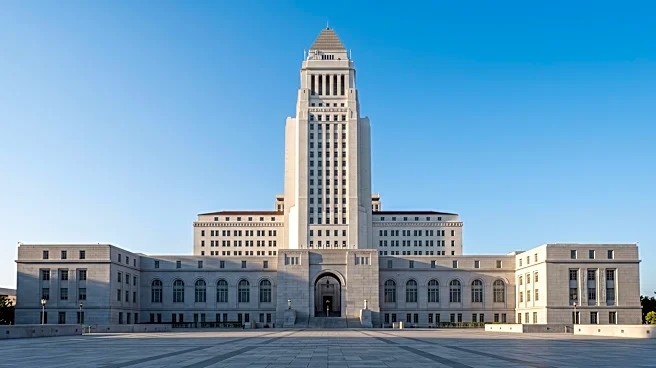
The Los Angeles City Council is scheduled to vote on Tuesday on an ordinance that would extend enhanced labor protections to fast-food workers, mirroring a 2024 law already in place for large retail employees. The proposed ordinance, approved by the L.A.
City Council’s economic development and jobs committee last month, aims to provide fast-food workers with more predictable schedules, requiring employers to give notice of schedules at least two weeks in advance. Additionally, it mandates a six-hour paid training session to educate workers on minimum wage laws and other labor protections. This initiative is strongly supported by the California Fast Food Workers Union, affiliated with the Service Employees International Union, which has long advocated for better conditions for the predominantly immigrant and female workforce in the fast-food industry. City Councilmember Hugo Soto-Martinez first introduced the ordinance in 2024.
Why It's Important?
This proposed ordinance is significant for the U.S. labor landscape, particularly in the fast-food sector, which employs over 750,000 people in California alone. Unstable schedules in this industry make it difficult for workers to manage finances, childcare, and medical appointments. By mandating predictable scheduling and labor rights training, Los Angeles aims to improve the quality of life and economic stability for a vulnerable workforce. The training component is crucial for empowering workers to understand and assert their rights regarding issues like wage theft and unsafe working conditions. However, the California Restaurant Association opposes the ordinance, arguing it will significantly increase operational costs in an already expensive state and unfairly target the industry. They also express concerns that third-party training could be used by labor groups for unionization campaigns and raise privacy issues regarding workers' data.
What's Next?
The Los Angeles City Council will hold a vote on the proposed ordinance on Tuesday. If passed, the ordinance will likely face strong opposition from business groups, potentially leading to legal challenges or lobbying efforts to mitigate its impact. The California Restaurant Association and other business interests are expected to continue their advocacy against the measure, citing concerns about increased costs and potential interference with business operations. The implementation of the mandatory training will require careful oversight to ensure it effectively educates workers while addressing privacy concerns and avoiding undue influence from labor groups. The outcome in Los Angeles could inspire similar legislative efforts in other cities or states, further shaping labor policies in the fast-food industry nationwide.
Beyond the Headlines
The debate over the Los Angeles fast-food worker ordinance highlights a fundamental tension between worker protections and business interests in the U.S. economy. Beyond predictable schedules and training, the ordinance touches on the broader issue of worker empowerment and the role of unions in advocating for vulnerable populations. The business community's concern about 'third parties administering worker training' being used for 'union campaigns' reveals the ongoing struggle over unionization efforts in industries with large, often low-wage, workforces. This ordinance could be seen as a step towards rebalancing power dynamics in the workplace, giving workers more agency and knowledge of their rights. It also raises questions about the future of the fast-food business model, potentially pushing companies to innovate in how they manage labor costs and employee relations. The success or failure of this ordinance could influence the national conversation on labor rights, minimum wage, and the future of work in the gig and service economies.