

What's Happening?
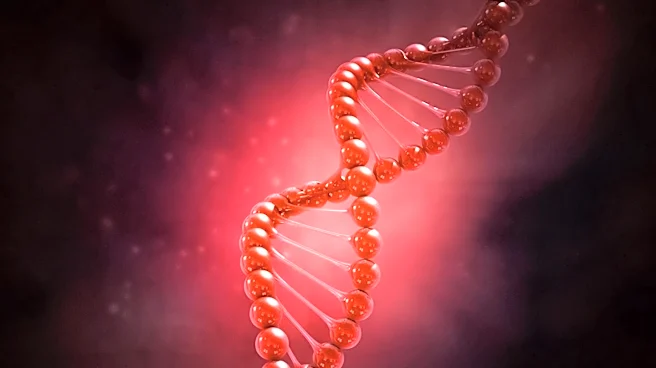
A study published in Current Biology reveals that a Neanderthal growth hormone receptor, inherited by modern humans through interbreeding around 47,000 years ago, is linked to increased muscle mass. This receptor variant, more common in South and East
Asian populations, causes muscle cells to grow 40% larger when exposed to human growth hormone. The study, led by an international team of evolutionary anthropologists, found that this genetic trait affects body measurements starting around puberty, resulting in slightly different jaw shapes, shorter tooth roots, and increased muscle mass in adults.
Why It's Important?
The discovery highlights the lasting impact of Neanderthal genetics on modern human physiology, providing insights into how ancient interbreeding events continue to influence human traits today. Understanding these genetic influences can shed light on human evolutionary history and the development of physical characteristics. The study also emphasizes the complexity of genetic inheritance and its role in shaping human diversity, with potential implications for fields such as anthropology, genetics, and evolutionary biology.
What's Next?
Further research may explore other genetic traits inherited from Neanderthals and their effects on modern human populations. Scientists could investigate how these traits interact with other genetic and environmental factors to influence health and physical characteristics. This ongoing research could enhance our understanding of human evolution and the genetic diversity within modern populations.
Beyond the Headlines
The study challenges the notion that human evolution is solely driven by recent genetic changes, highlighting the importance of ancient genetic contributions. It also raises questions about the role of genetic diversity in adaptation and survival, as well as the potential for ancient genes to influence modern health and disease. This research underscores the interconnectedness of human populations and the complex history of human evolution.