






What's Happening?
The United Kingdom has allocated £2.1 million (US$2.8 million) to the Food and Agriculture Organization of the United Nations (FAO) and the United Nations World Food Programme (WFP) to bolster anticipatory flood action in South Sudan. This funding aims
to assist hundreds of thousands of individuals in vulnerable communities to prepare for impending climate shocks. South Sudan is currently grappling with a complex climate situation, including El Niño-linked drought conditions alongside flood risks. The FAO and WFP will jointly implement these interventions in Jonglei, Unity, and Upper Nile states. The program, which runs until March 2027, adopts a three-pronged approach: delivering anticipatory assistance to at-risk households before floods, supporting community-based early-warning systems, and utilizing hydrological observations and expert analysis where pre-agreed flood triggers are absent. The initiative also focuses on strengthening coordination and preparedness, with government engagement being a central component of proactive flood-risk management.
Why It's Important?
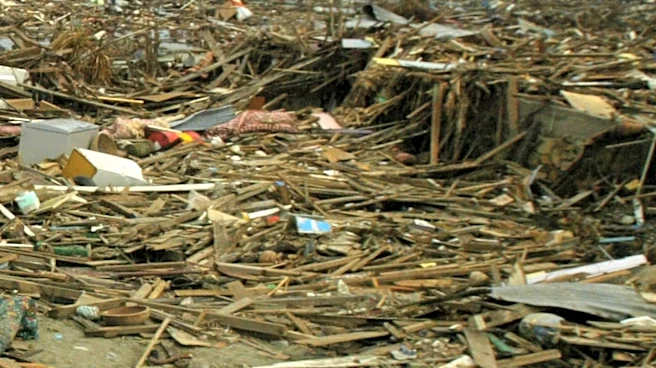
This UK funding is crucial for mitigating the humanitarian impact of climate shocks in South Sudan, a nation frequently affected by recurring climate events that exacerbate existing humanitarian pressures. By focusing on anticipatory action, the program aims to reduce avoidable losses and limit the scale of subsequent humanitarian responses, which are often more costly and less effective. The emphasis on agriculture-linked livelihoods, a primary source of food and income for many South Sudanese, is particularly significant. Protecting these assets before disasters strike can prevent widespread food insecurity and economic disruption. This proactive approach, supported by climate data and early-warning information, represents a shift towards more efficient and timely humanitarian aid, potentially saving lives and preserving livelihoods that would otherwise be devastated by floods and droughts.
What's Next?
The anticipatory flood action program is set to continue until March 2027. During this period, FAO and WFP will work to implement the three-pronged strategy, which includes providing direct assistance, establishing early-warning systems, and conducting vulnerability assessments. The program will also involve prepositioning humanitarian supplies, offering anticipatory cash assistance, and engaging in livelihood protection and labor-intensive public works. The success of this initiative will likely influence future funding models for humanitarian aid, potentially encouraging more donors to invest in anticipatory action rather than solely reactive responses. Continued engagement with the South Sudanese government will be vital for the long-term sustainability and effectiveness of these flood-risk management strategies.
Beyond the Headlines
The UK's investment in anticipatory action in South Sudan highlights a broader global trend towards proactive disaster management, moving away from traditional reactive humanitarian responses. This model acknowledges the increasing predictability of certain climate hazards and seeks to leverage scientific data to empower communities to prepare and adapt. The ethical implication is a shift from merely alleviating suffering to actively preventing it, potentially fostering greater resilience and self-sufficiency in vulnerable populations. This approach could also set a precedent for how international aid is structured in other climate-vulnerable regions, emphasizing prevention and preparedness as key components of humanitarian strategy. The long-term success of such initiatives could lead to a re-evaluation of the cost-effectiveness and moral imperative of early intervention in the face of climate change.