





What's Happening?
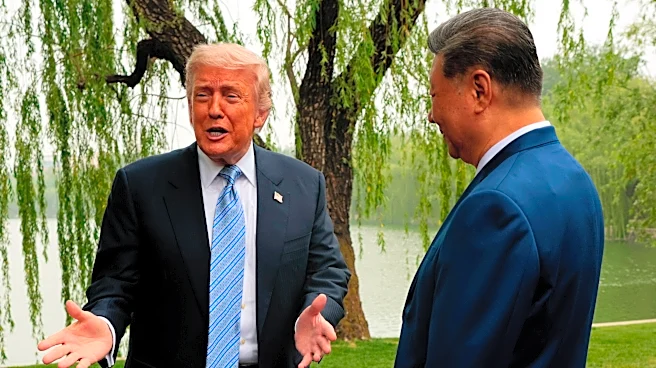
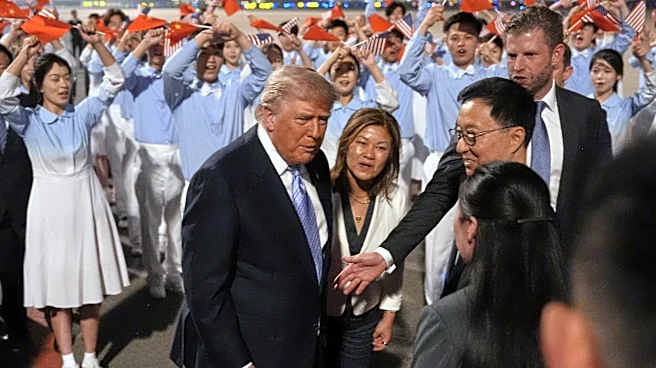
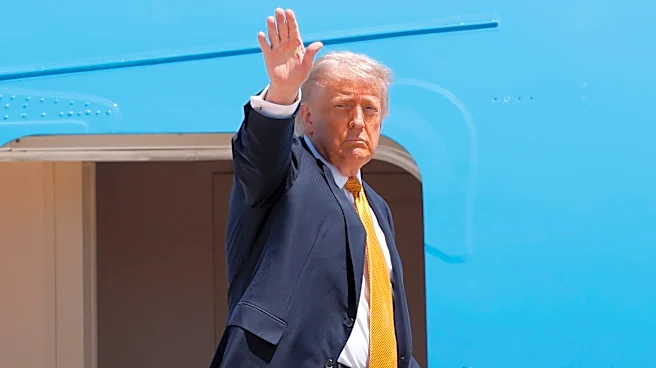
President Donald Trump concluded a three-day summit in China with President Xi Jinping, focusing on key issues such as Taiwan, trade, and Iran. The summit aimed to stabilize U.S.-China relations and open China to American businesses. Despite progress,
significant differences remain, particularly regarding Taiwan, which Xi emphasized as a critical issue. Trump maintained the U.S.'s longstanding policy on Taiwan, despite Xi's warnings of potential conflict. The leaders discussed trade, with Trump hinting at future deals, including China's interest in purchasing Boeing jets and American oil. Xi expressed willingness to assist in resolving the Iran conflict, highlighting China's strategic interest in the Strait of Hormuz.
Why It's Important?
The summit's outcomes could significantly impact U.S.-China relations, affecting global trade and geopolitical stability. The discussions on Taiwan are crucial, as any shift in U.S. policy could escalate tensions. The potential trade deals, including Boeing's aircraft sales, could boost the U.S. economy and strengthen bilateral economic ties. Xi's offer to mediate in the Iran conflict underscores China's growing influence in global diplomacy. The summit reflects the complex interplay of cooperation and competition between the two superpowers, with implications for international trade, security, and economic policies.
What's Next?
Future developments may include formalizing trade agreements and monitoring China's actions regarding Taiwan and Iran. The U.S. administration will likely continue to navigate the delicate balance of maintaining strategic interests while fostering economic cooperation. The potential for a state visit by Xi to the U.S. could further solidify diplomatic ties. Observers will watch for any shifts in U.S. policy on Taiwan and the impact of China's involvement in the Iran conflict. The outcomes of these discussions could influence global markets and international relations.