




What's Happening?
Researchers, including marine biologist Heather Judkins from USF St. Petersburg, are documenting substantial declines in deep-sea marine life in the Gulf of Mexico. These findings, recently published in the Proceedings of the National Academy of Sciences,
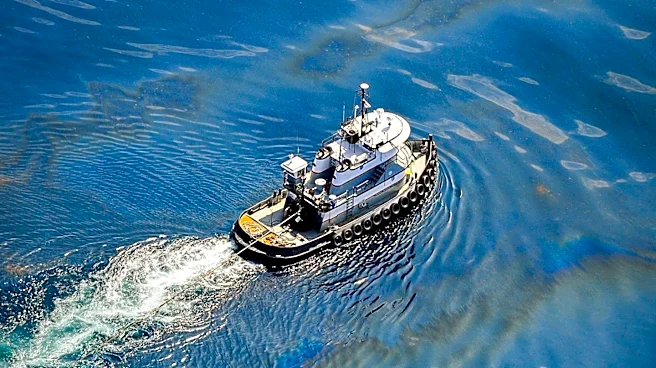
raise concerns about the long-term impact of the BP-operated Deepwater Horizon oil spill. The EPA reported that the 2010 Deepwater Horizon explosion and sinking resulted in 11 deaths and was the largest oil spill in marine drilling history. The DEEPEND research consortium, a nationwide effort, began its work in 2011 to assess the damage. Their studies, focusing on waters between 200 and 1,500 meters below the surface, revealed steep declines in certain fish populations from 2011 to 2015. Specifically, squid and octopus populations decreased by approximately 60% in the midwater column, while other creatures like krill and lanternfishes saw declines of up to 85%. Tracey Sutton, director of the DEEPEND Research Consortium, noted that oil exposure can lead to immediate death or developmental issues, potentially compromising future generations through contaminated eggs. Researchers meticulously triple-checked their findings, using multiple lines of evidence to ensure accuracy.
Why It's Important?
The documented declines in deep-sea marine life highlight the severe and potentially lasting ecological consequences of major environmental disasters like the Deepwater Horizon oil spill. This research is crucial because it provides the most comprehensive study to date on deep-sea ecosystems, revealing a magnitude of decline greater than any observed over 60 years from comparable datasets. The deep-water creatures, though unseen by most, play a vital role in the Gulf's food chain, and their diminished populations threaten the overall health and stability of the entire ecosystem. The unexpected lack of recovery, despite the Gulf being a vast system, suggests that deep-sea environments are more fragile and less resilient to change than previously assumed. This understanding is critical for informing future environmental policies, disaster response strategies, and conservation efforts, emphasizing the need for robust protections against similar incidents. The findings also underscore the interconnectedness of marine life, providing scientists with a better understanding of energy flow and food web dynamics in these unexplored depths.
What's Next?
Researchers plan another expedition for the upcoming summer and aim to continue tracking changes in deep-sea populations for another decade. This ongoing monitoring is essential to determine if natural recovery occurs, as there is no system in place to repair the deep-sea environment directly; it must heal on its own. The long-term data collected will be vital for understanding the recovery trajectory of these fragile ecosystems and for developing more effective preventative measures and response protocols for future environmental incidents. BP, in response to the research, issued a statement acknowledging that the Deepwater Horizon incident profoundly changed the company. They emphasized their commitment to safety, stating that the lessons learned and changes made, including tougher safety standards and better oversight, remain central to their operations to prevent similar events. The continued research will serve as a critical benchmark for evaluating the efficacy of such commitments and the broader impact of industrial activities on marine environments.
Beyond the Headlines
Beyond the immediate ecological impact, this research uncovers deeper implications regarding our understanding of biodiversity and the resilience of natural systems. The discovery of previously unknown species in the Gulf's depths, even amidst significant declines, highlights the vast, unexplored biodiversity that remains vulnerable to human activities. This underscores an ethical imperative to protect these hidden ecosystems, not only for their intrinsic value but also for the potential scientific and medicinal discoveries they may hold. The fragility of the deep-sea system, as revealed by its slow recovery, challenges the notion that large natural systems can simply 'refill themselves' after catastrophic events. This shift in understanding could lead to a re-evaluation of environmental impact assessments and regulatory frameworks, pushing for more precautionary approaches to industrial activities in sensitive marine environments. The study also serves as a stark reminder of the long-term consequences of human actions, extending far beyond the immediate aftermath of a disaster and affecting generations of marine life.