




What's Happening?
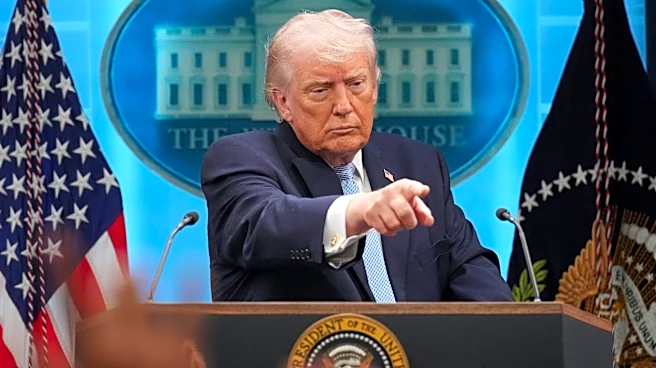
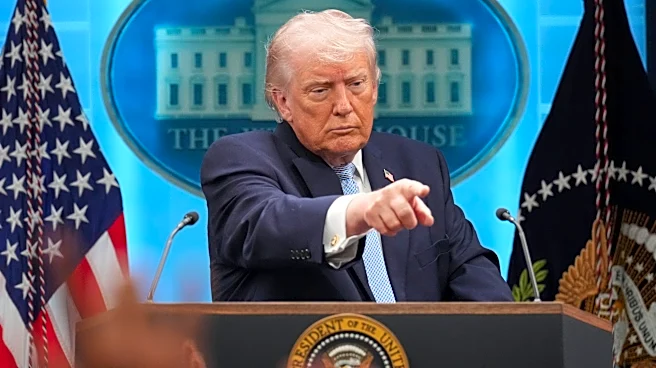
President Trump has issued a stern warning to Iran, stating that U.S. military forces will remain stationed in and around Iran until Tehran fully complies with a peace agreement. In a post on Truth Social, Trump emphasized that if Iran fails to adhere
to the terms, a military response described as 'bigger, and better, and stronger than anyone has ever seen before' will be initiated. This announcement follows a ceasefire agreement between the U.S. and Iran, with upcoming talks scheduled in Islamabad to further negotiate peace terms. Vice President JD Vance is set to lead the U.S. delegation in these discussions.
Why It's Important?
The situation underscores the ongoing tensions between the U.S. and Iran, with significant implications for international relations and regional stability. The presence of U.S. military forces in the Middle East serves as a strategic deterrent but also raises the stakes for potential conflict. The Strait of Hormuz, a critical global shipping route, remains a focal point, with its security being a key condition of the ceasefire. The outcome of the negotiations could impact global oil markets and geopolitical alliances, particularly if the ceasefire fails and military actions are taken.
What's Next?
The upcoming talks in Islamabad will be crucial in determining the future of U.S.-Iran relations. Both sides have agreed to a two-week ceasefire, providing a window for diplomatic efforts. However, the durability of this truce is uncertain, and the potential for escalation remains if negotiations do not yield a satisfactory agreement. The international community will be closely monitoring these developments, as any military conflict could have widespread repercussions.