



What's Happening?
Tens of thousands of residents across western Washington experienced power outages overnight Saturday due to strong wind gusts and heavy rain. As of Sunday morning, approximately 15,000 customers remained without power. Seattle's Capitol Hill and South
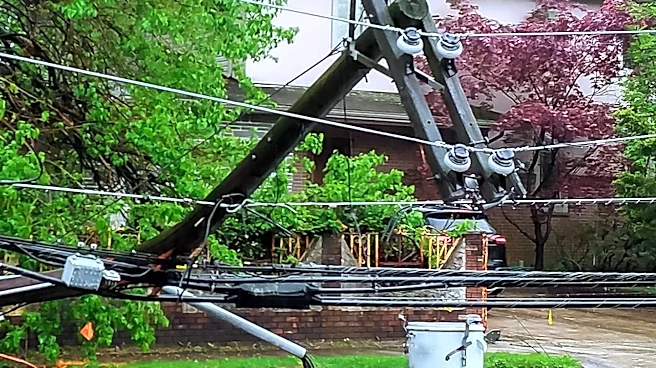
Seattle neighborhoods, including Burien, were among the most affected areas, with numerous downed power lines, trees, and streetlights reported. Utility companies such as Seattle City Light, Puget Sound Energy, Snohomish County Public Utility District, and Tacoma Public Utilities have been working to restore power, with Seattle City Light reporting that power had been restored to about 80% of its initially impacted customers. Despite these efforts, full restoration timelines for all remaining outages are still unclear.
Why It's Important?
The widespread power outages in western Washington highlight the vulnerability of critical infrastructure to severe weather events. For affected residents, the loss of power disrupts daily life, impacting access to heating, refrigeration, and communication. Businesses in the affected areas may experience closures and financial losses due to the inability to operate. The incident also underscores the importance of emergency preparedness for both individuals and utility providers, as prolonged outages can pose health and safety risks, particularly for vulnerable populations. The ongoing efforts by utility companies to restore power demonstrate the significant resources required to manage and mitigate the effects of such weather-related disruptions.
What's Next?
Utility crews will continue working to restore power to the remaining thousands of customers in western Washington. Residents are advised to take safety precautions, such as avoiding downed power lines and using flashlights instead of candles. Utility companies will likely provide updated timelines for full restoration as their assessment and repair efforts progress. In the aftermath, there may be discussions about infrastructure resilience and potential upgrades to better withstand future severe weather events. Local authorities will also continue to monitor and address any lingering hazards, such as damaged streetlights and fallen trees, to ensure public safety.
Beyond the Headlines
Beyond the immediate inconvenience, these power outages underscore broader challenges related to climate change and aging infrastructure. As weather patterns become more extreme, the frequency and intensity of such events could increase, placing greater strain on power grids. This situation prompts questions about the long-term investments needed to modernize and harden electrical infrastructure to ensure reliability. Furthermore, the incident highlights the critical role of community preparedness and mutual aid networks in responding to widespread emergencies, emphasizing the need for robust communication strategies and public awareness campaigns on how to cope with extended outages.