
What's Happening?
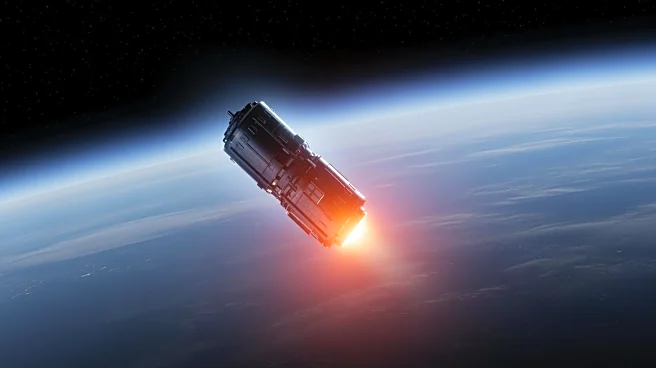
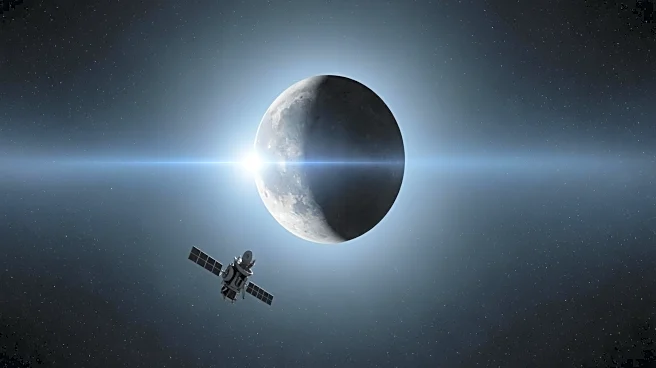
NASA's Van Allen Probe A, a 1,323-pound spacecraft, is expected to burn up in Earth's atmosphere after spending 14 years in space. Launched on August 30, 2012, alongside its twin, Van Allen Probe B, the mission was initially designed to last two years to study
the Van Allen radiation belts. These belts are crucial for understanding space travel as they contain charged particles that can be hazardous to astronauts and equipment. The mission extended to seven years, with both probes running out of fuel in 2019. The re-entry of Probe A is anticipated to occur Tuesday night, although the exact timing is uncertain. The probe's re-entry is being monitored by NASA and the U.S. Space Force, with a minimal chance of debris causing harm on Earth.
Why It's Important?
The Van Allen Probes have provided significant insights into the radiation belts, which are vital for the safety of space missions. Understanding these belts helps in planning safe trajectories for spacecraft and protecting astronauts from radiation exposure. The mission's findings, including the discovery of an occasional third belt, have advanced scientific knowledge and contributed to the development of space exploration technologies. The re-entry of Probe A marks the end of a successful mission that has enhanced our understanding of space weather and its impact on Earth.
What's Next?
NASA and the U.S. Space Force will continue to monitor the re-entry of Van Allen Probe A to ensure public safety. The data collected from the mission will continue to be analyzed to further understand the dynamics of the Van Allen belts. Future missions may build on these findings to develop more advanced technologies for space exploration and radiation protection.