



What's Happening?
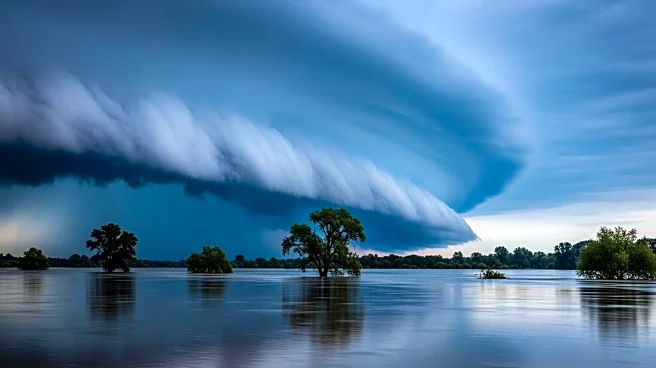
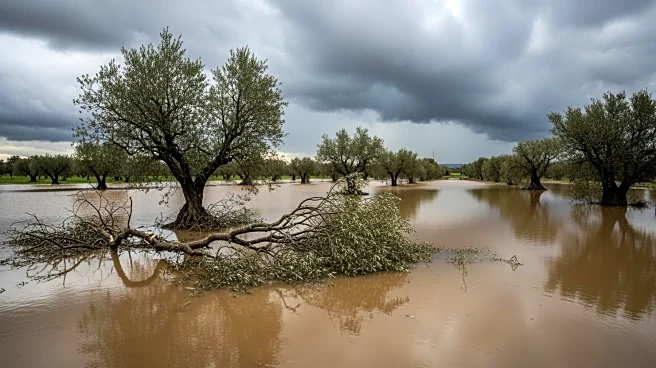
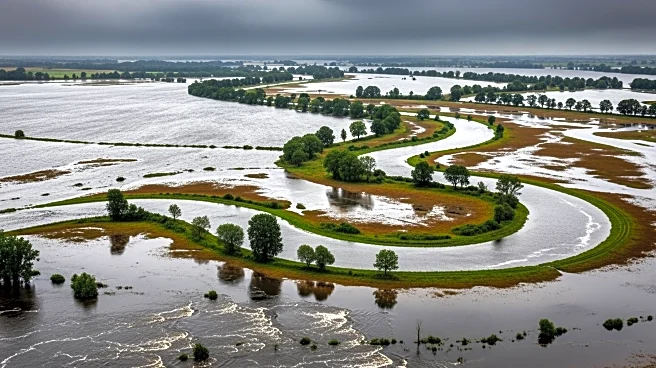
South Africa has declared a national disaster following severe flooding caused by torrential rains, which have resulted in the deaths of at least 30 people in the northern regions of the country. The declaration, made by the head of the National Disaster
Management Center and announced by the government, enables a coordinated national response to the disaster. The most affected areas are the northern provinces of Limpopo and Mpumalanga, where significant damage to infrastructure, including homes, roads, and bridges, has been reported. The flooding has also led to the temporary closure of the Kruger National Park, a major tourist destination, and the evacuation of hundreds of tourists and staff. The severe weather has also impacted neighboring countries, with heavy rains causing flooding in Mozambique and Zimbabwe, contributing to over 100 deaths across the region since the rains began late last year.
Why It's Important?
The declaration of a national disaster in South Africa underscores the severe impact of climate-related events on infrastructure and human life. The flooding has caused extensive damage, estimated at around $240 million in Limpopo province alone, highlighting the economic strain on affected regions. The closure of the Kruger National Park, a significant source of tourism revenue, further exacerbates the economic impact. The situation also raises concerns about the preparedness and resilience of infrastructure in the face of increasingly frequent and severe weather events, which are often linked to climate change. The coordinated national response aims to mitigate the immediate effects and prevent further loss of life, but the long-term recovery and rebuilding efforts will require substantial resources and planning.
What's Next?
In the coming days, South African authorities will focus on search and rescue operations, particularly in areas where individuals are still missing. Efforts will also be directed towards reopening the Kruger National Park and restoring normalcy to affected communities. The government may seek international assistance to bolster its response and recovery efforts. Additionally, there will likely be discussions on improving infrastructure resilience and disaster preparedness to better handle future climate-related events. The situation may prompt policy reviews and increased investment in climate adaptation strategies to protect vulnerable regions from similar disasters in the future.
Beyond the Headlines
The flooding in South Africa highlights broader issues related to climate change and its impact on vulnerable regions. The increasing frequency and intensity of such events call for a reevaluation of current environmental policies and infrastructure planning. There is a growing need for sustainable development practices that prioritize climate resilience. The disaster also underscores the importance of regional cooperation in addressing transboundary environmental challenges, as neighboring countries like Mozambique and Zimbabwe are similarly affected. This event may serve as a catalyst for stronger regional partnerships and collaborative efforts to tackle climate change and its consequences.