


What's Happening?
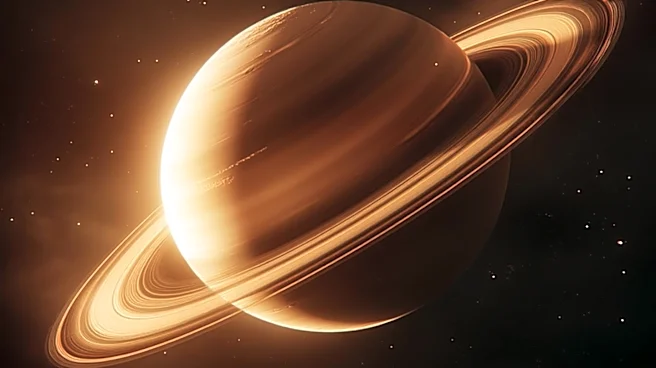
Saturn, the ringed planet, is set to change its motion from eastward to westward against the background stars of Pisces. This astronomical event, known as retrograde motion, occurs when Saturn appears to halt and reverse its direction in the sky. The
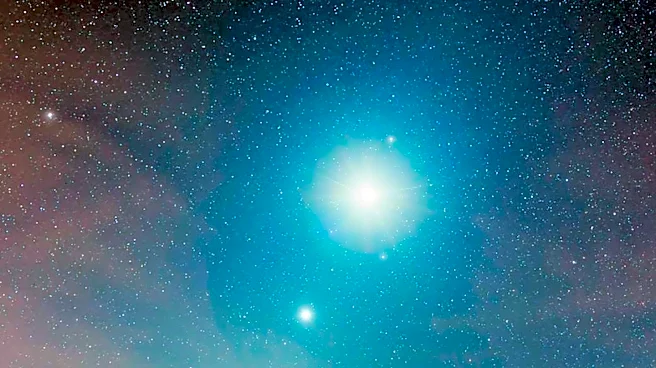
phenomenon is best observed in the early morning hours when Saturn is the brightest point in the southeastern sky. On July 27, Saturn will be approximately 40 degrees high in the southeast, making it an ideal time for observation. The planet's largest moon, Titan, will also be visible, moving eastward and providing a dynamic view of orbital mechanics. This event marks the end of Saturn's prograde motion and the beginning of its retrograde phase, which will continue for several months.
Why It's Important?
The retrograde motion of Saturn is significant for astronomers and sky watchers as it provides a unique opportunity to observe the planet's movement and its interaction with its moons. This event is a reminder of the dynamic nature of our solar system and the intricate dance of celestial bodies. For amateur astronomers, it offers a chance to witness a rare astronomical event and deepen their understanding of planetary motion. The visibility of Titan, Saturn's largest moon, adds an extra layer of interest, allowing observers to track its movement relative to the planet. This event also highlights the importance of timing and location in astronomical observations, as the best views are often in the early morning hours.
What's Next?
As Saturn enters its retrograde phase, astronomers and enthusiasts will continue to monitor its movement and the behavior of its moons. This period of retrograde motion will last for several months, providing ample opportunity for observation and study. The changing positions of Saturn and its moons will be of particular interest to those studying planetary dynamics and the gravitational interactions within our solar system. Observers are encouraged to use telescopes and binoculars to enhance their viewing experience and to track the planet's progress across the night sky.