






What's Happening?
The Massachusetts State Senate has unanimously approved a 'Dark Skies' bill, officially titled 'An Act to Improve Outdoor Lighting, Conserve Energy, and Increase Dark-Sky Visibility.' This legislation aims to implement stricter regulations on municipality-owned
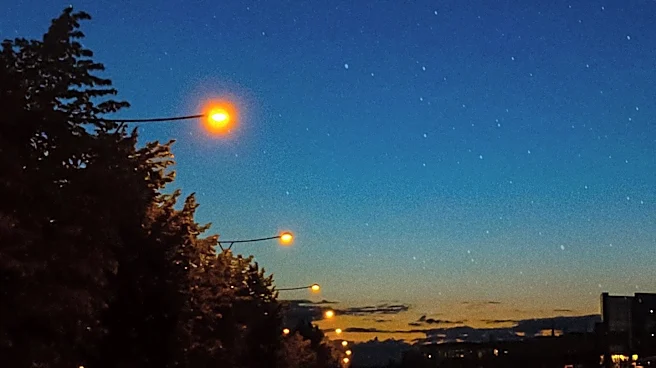
streetlights across the state. The bill, which passed with a 39-0 vote after two amendments on July 1, has now advanced to the House Committee on Ways and Means for further consideration. If enacted, the bill would establish uniform standards for publicly funded streetlights, including limits on brightness and blue-light output, and mandate that lights be directed specifically at roadways. Additionally, the proposal seeks to alter how municipalities are billed for streetlight power, shifting from a per-light pricing model to one based on metered electricity usage. This change is expected to address discrepancies where towns are currently overpaying for electricity due to outdated billing practices that do not account for the lower power consumption of modern LED streetlights.
Why It's Important?
This legislation holds significant importance for Massachusetts municipalities and residents. Economically, the shift to metered electricity billing for streetlights could lead to substantial savings for cities and towns, as many are currently paying for more electricity than their LED streetlights actually consume. This financial relief could free up municipal funds for other essential services. Environmentally, the bill aims to reduce light pollution, which supporters argue can disrupt wildlife, create glare, and diminish the visibility of the night sky. Improved outdoor lighting standards are also touted to enhance public safety by reducing glare and ensuring light is directed where it is most needed. The bill represents a move towards more sustainable and cost-effective public infrastructure management, aligning with broader efforts to conserve energy and mitigate environmental impacts.
What's Next?
The 'Dark Skies' bill, having cleared the Massachusetts State Senate, now moves to the House Committee on Ways and Means. For the bill to become law, both the state Senate and House must reconcile their respective versions of the legislation. Following successful reconciliation and passage in both chambers, the bill would then proceed to Governor Maura Healey's desk for her signature. The legislative process will involve further debate and potential amendments in the House before a final version can be agreed upon. Stakeholders, including environmental groups like DarkSky Massachusetts and municipal leaders, will likely continue to advocate for its passage, emphasizing the benefits of reduced energy costs and light pollution. The timeline for final enactment will depend on the legislative calendar and the speed at which the House reviews and approves its version of the bill.
Beyond the Headlines
Beyond the immediate financial and environmental benefits, the 'Dark Skies' bill touches upon broader societal implications regarding urban planning and public health. Excessive artificial light at night has been linked to various issues, including disruption of human circadian rhythms, which can affect sleep patterns and overall well-being. By reducing light pollution, the bill could contribute to healthier urban environments and allow residents to reconnect with the natural night sky, fostering a greater appreciation for astronomy and natural cycles. Furthermore, the legislation highlights a growing trend in urban policy towards smart city initiatives that prioritize energy efficiency and environmental stewardship. It could serve as a model for other states looking to implement similar measures, demonstrating how targeted legislative action can address both fiscal responsibility and ecological concerns in public infrastructure.