



What's Happening?
The Pacific Northwest coastline, encompassing Oregon and Washington, notably lacks major urban centers despite the presence of vibrant cities like Seattle and Portland in the broader region. This phenomenon is explored in a YouTube video by 'Geography
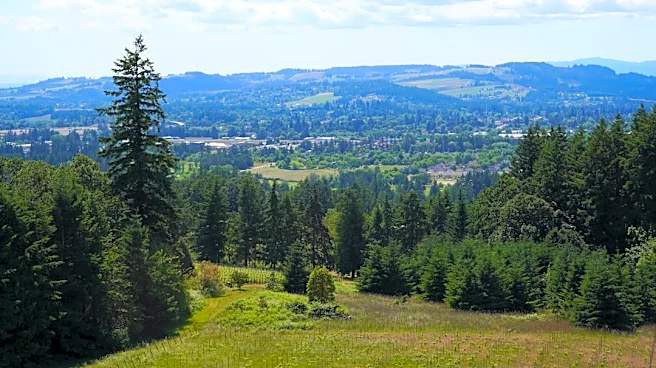
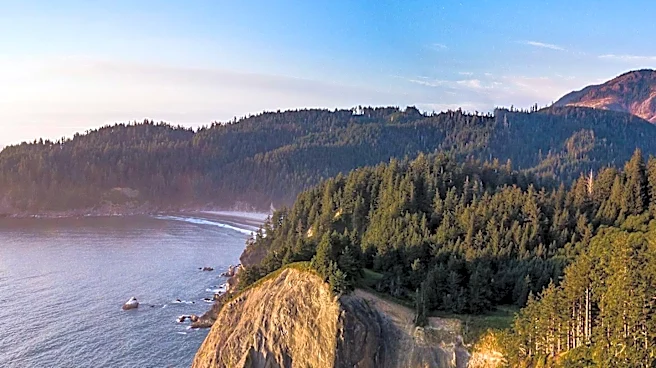
By Geoff,' which attributes the sparse population to a complex interplay of geography, climate, and historical events. The coastline features dramatic geography, including rocky headlands, cliffs, and sea stacks, which are visually stunning but challenging for development. The Olympic Peninsula's Hoh Rainforest, for instance, receives significantly more rainfall than Seattle. The Pacific Coastal Range acts as a natural barrier, isolating the coast from more fertile inland areas like the Willamette Valley and Puget Sound, making infrastructure development costly and prone to disruptions. Furthermore, the region's harsh oceanic climate, characterized by relentless rain, wind, and limited sunshine, has historically deterred large-scale agriculture and construction, making it less hospitable for early European settlers. Indigenous communities thrived by adapting to these conditions, but their populations were severely impacted by the 1700 Cascadia megathrust earthquake and subsequent European contact.
Why It's Important?
The absence of major cities along the Pacific Northwest coast highlights the profound influence of natural geography and climate on human settlement patterns and economic development. This unique demographic distribution has preserved the pristine nature of the coastline, offering significant ecological and recreational value. For environmental conservation efforts, this sparsely populated region presents both opportunities and challenges; while it remains largely untouched, it also faces pressures from tourism and resource extraction. Economically, the lack of urban hubs means that industries typically associated with coastal cities, such as large-scale shipping ports or extensive maritime commerce, are concentrated elsewhere in the region, primarily in inland waterways like Puget Sound. This also impacts regional planning and infrastructure development, as resources are directed towards existing urban centers rather than coastal expansion. Understanding these factors is crucial for policymakers and developers considering future land use and conservation strategies in the Pacific Northwest.
What's Next?
Given the enduring geographical and climatic challenges, it is unlikely that major urban centers will emerge along the Oregon and Washington coast in the foreseeable future. Future developments will likely continue to focus on preserving the natural environment while supporting existing smaller communities and tourism. This could involve continued investment in infrastructure that supports eco-tourism and outdoor recreation, such as improvements to Highway 101 and access to national parks like Olympic National Park. Stakeholders, including local governments, environmental groups, and tourism boards, will likely continue to balance economic development with conservation goals. There may also be ongoing efforts to understand and mitigate the risks associated with natural disasters, such as earthquakes and tsunamis, which have historically impacted the region and continue to pose a threat to coastal communities. Research into sustainable development practices that respect the unique environmental conditions of the coast will also be crucial.
Beyond the Headlines
The story of the Pacific Northwest coast's lack of major cities extends beyond mere geography, touching upon deeper themes of human resilience, adaptation, and the long-term consequences of historical events. The devastating 1700 Cascadia megathrust earthquake serves as a stark reminder of the powerful forces of nature and their capacity to reshape human societies, particularly indigenous populations who were profoundly affected. This historical context underscores the importance of disaster preparedness and understanding geological risks in coastal regions. Furthermore, the contrast between the sparsely populated coast and the bustling inland cities like Seattle and Portland illustrates how early strategic choices in settlement, often driven by access to navigable waterways and fertile land, can have lasting impacts on regional development. This narrative also highlights the cultural significance of preserving natural landscapes, as the pristine coastline offers a unique counterpoint to the urbanization seen elsewhere, fostering a distinct regional identity tied to wilderness and natural beauty.