
What's Happening?
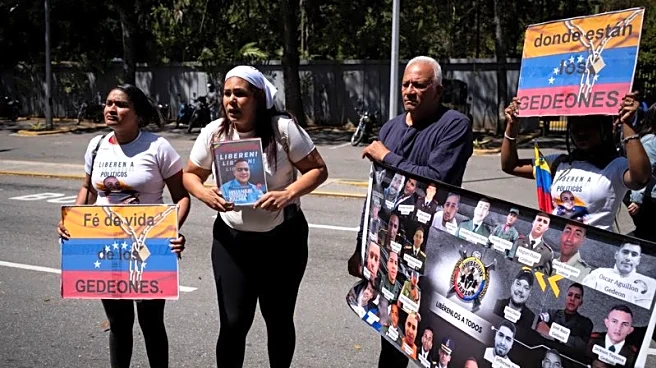
A group of Venezuelan migrants, previously transferred by the U.S. government to a prison in El Salvador, are demanding justice following a recent federal court ruling. The ruling, issued by a judge in Washington,
mandates that the Trump administration provide legal due process to these 252 men, either through court hearings or by allowing their return to the U.S. The migrants, accused of being part of the Tren de Aragua gang, were sent to El Salvador under an 18th-century wartime law. They claim to have suffered physical and psychological torture during their detention. The Venezuelan government, which organized a press conference for the men in Caracas, has retained legal services to support their claims. The migrants are seeking international assistance to ensure their human rights are respected, though not all wish to return to the U.S., citing distrust in the government.
Why It's Important?
This development highlights significant human rights concerns and the legal responsibilities of the U.S. government towards migrants. The court's decision underscores the importance of due process, even for individuals accused of serious crimes. The case also reflects broader geopolitical tensions, as the Venezuelan government, led by President Nicolás Maduro, is actively pursuing legal action against the Trump administration. This situation could impact U.S.-Venezuela relations and influence international perceptions of U.S. immigration policies. The outcome of this legal battle may set precedents for how similar cases are handled in the future, affecting both domestic and international legal frameworks regarding migrant rights.
What's Next?
The Venezuelan government, in collaboration with U.S. legal associations and human rights organizations, is preparing a major lawsuit against the Trump administration. This legal action aims to hold the U.S. accountable for alleged human rights violations. The case may lead to increased scrutiny of U.S. immigration practices and could prompt policy changes. International organizations might also become more involved, potentially influencing diplomatic relations. The migrants' future remains uncertain, as they navigate legal processes and seek justice for their treatment.