



What's Happening?
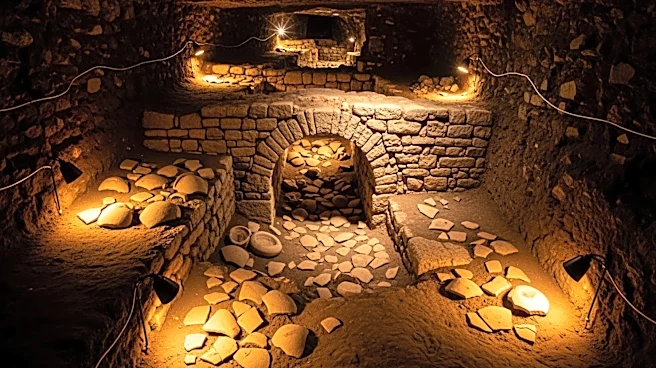
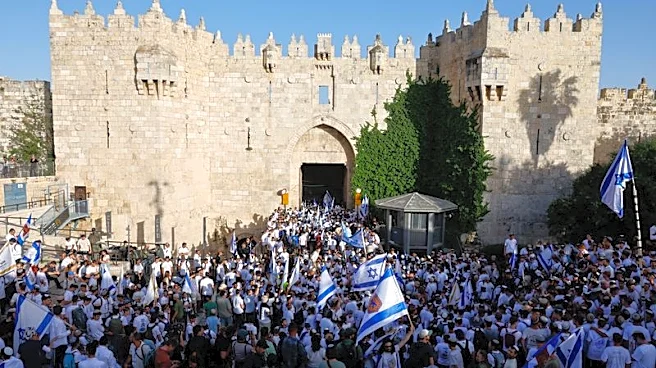
Recent archaeological excavations beneath the Western Wall Plaza in Jerusalem have uncovered a hidden city, revealing layers of history from various periods, including Roman and First Temple-era structures. Led by the Western Wall Heritage Foundation,
the project has exposed ancient artifacts such as pottery handles used for tax jars, a four-room house from the First Temple period, and a ritual bath from the Second Temple period. These findings provide a tangible connection to Jewish history and tradition, offering insights into the lives of ancient inhabitants and the city's historical significance.
Why It's Important?
The discoveries beneath the Western Wall are crucial for understanding Jerusalem's rich historical and cultural heritage. They offer a unique glimpse into the city's past, enhancing our knowledge of ancient Jewish life and the broader historical context of the region. These findings have the potential to attract scholars, historians, and tourists, boosting cultural tourism and educational opportunities. Moreover, they underscore the importance of preserving archaeological sites, which serve as vital links to our collective past and contribute to cultural identity and continuity.