






What's Happening?
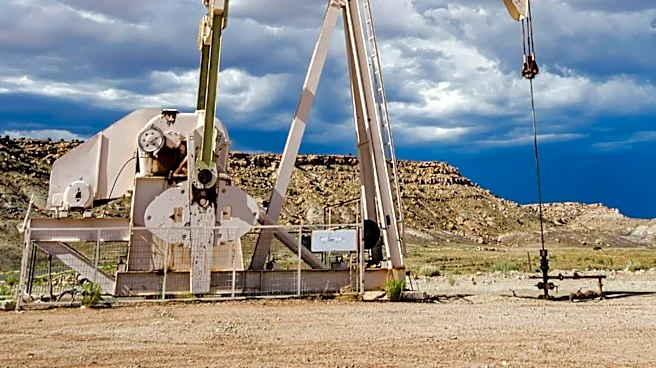
New Mexico's Environment Department has submitted a proposed methane rule to the Environmental Improvement Board, aiming to significantly reduce methane leaks and wasted fuel from oil and gas operations. This proposal is a key part of Governor Michelle
Lujan Grisham's administration's broader initiative to tackle air pollution from the oil and gas sector. The new rule would mandate faster responses to large methane leaks, requiring operators to investigate and repair them within three days of notification in most cases. It also expands existing requirements for equipment upgrades to prevent natural gas from venting into the atmosphere. The state estimates that without action, climate change could cost New Mexico $294 billion by 2050 due to infrastructure damage, health impacts, and agricultural losses.
Why It's Important?
This proposed methane rule is crucial for New Mexico's environmental and economic future. Methane is a potent greenhouse gas, and reducing its emissions directly contributes to mitigating climate change. By curbing leaks, the state can also conserve natural gas that would otherwise be lost, thereby protecting public revenue tied to oil and gas production. The rule's emphasis on rapid leak detection and repair, potentially utilizing third-party tools like satellites and aircraft, represents a significant advancement in environmental oversight. This initiative builds upon previous state actions, including the 2022 Ozone Precursor Rule and stronger clean vehicle standards, positioning New Mexico as a leader in addressing climate change and air quality issues within the U.S. oil and gas industry.
What's Next?
The Environmental Improvement Board will now decide whether to hold a public hearing on the proposed methane rule. If approved, the measure will become an integral part of New Mexico's strategy to reduce pollution, conserve energy resources, and limit climate damage. Oil and gas operators in the state will need to adapt to stricter regulations, including investing in upgraded equipment and implementing faster leak response systems. The rule is expected to align equipment standards with federal rules by 2031. This development could also influence other states with significant oil and gas operations to consider similar measures, potentially setting a new standard for environmental responsibility within the industry across the nation.
Beyond the Headlines
The proposed methane rule in New Mexico highlights the complex interplay between energy production, environmental protection, and economic sustainability. While the rule aims to reduce pollution and conserve resources, it also presents operational challenges and potential costs for oil and gas companies. The use of third-party detection methods, such as satellites, signifies a growing reliance on advanced technology for environmental monitoring and enforcement. This could lead to increased transparency and accountability within the industry. Furthermore, the rule underscores a broader societal shift towards demanding greater environmental responsibility from industries, particularly those with significant ecological footprints. It reflects a recognition that the long-term costs of inaction on climate change far outweigh the immediate costs of implementing preventative measures.