






What's Happening?
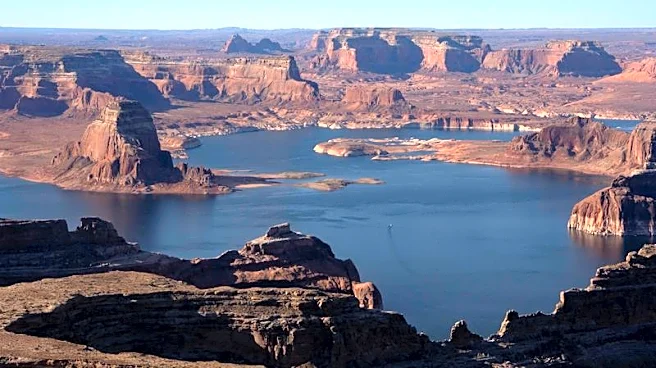
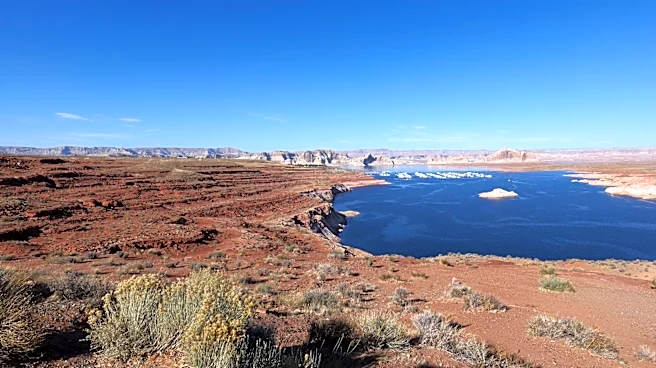
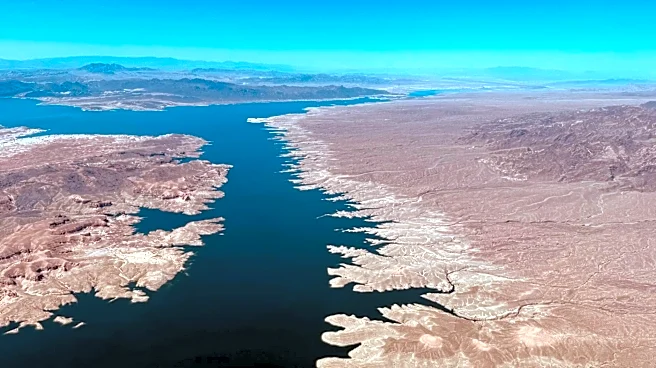
The Department of the Interior has released a new plan for managing water resources on the Colorado River. This plan comes after Colorado and six other states failed to reach an agreement on water releases from Lake Powell and Lake Mead, two critical
reservoirs. The plan spares upper basin states from mandatory water cuts for the time being, providing temporary relief amid ongoing negotiations. The decision reflects the complex and contentious nature of water management in the region, where states have struggled to balance water needs against diminishing supplies.
Why It's Important?
The Colorado River is a vital water source for millions of people and numerous industries across the western United States. The management of its resources is crucial for agriculture, urban water supply, and environmental conservation. The Interior Department's decision to avoid immediate cuts for upper basin states highlights the delicate balance required in water negotiations. It underscores the ongoing challenges of managing water resources in a region facing prolonged drought and climate change impacts. The plan's temporary nature suggests that further negotiations and potential conflicts are likely as states continue to grapple with water scarcity.
What's Next?
The Interior Department's plan is a temporary measure, and further negotiations among the states are expected. Stakeholders will need to work towards a long-term solution that addresses the needs of all parties involved. The situation will require continued collaboration and compromise to ensure sustainable water management. Future decisions will likely involve difficult trade-offs, as states balance their water needs with environmental and economic considerations. The outcome of these negotiations will have significant implications for water policy and resource management in the region.