
What's Happening?
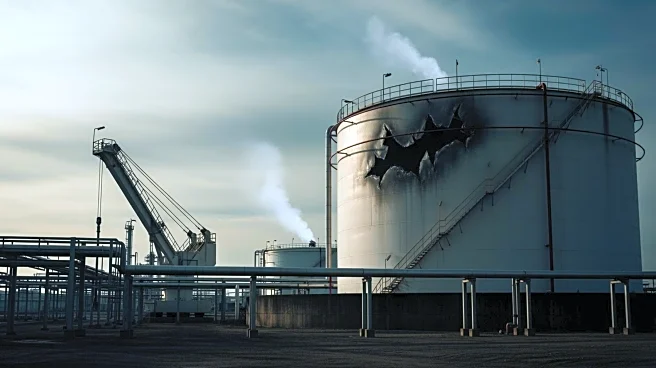
Ukraine's armed forces have targeted a liquefied petroleum gas (LPG) export terminal at the Russian port of Temryuk on the Sea of Azov. The attack, which occurred on December 5, resulted in the destruction
of 20 out of 30 storage tanks, significantly reducing the terminal's capacity. The Maktren-Nafta LPG terminal, built by Ukrainian contractor Ukrgazproekt, was designed to handle 400,000 tonnes of gas annually. The strike has led to a fire that reportedly burned for three days, potentially affecting Russian petroleum export revenues until repairs are completed. This is not the first attack on the port; a similar incident occurred in May 2024.
Why It's Important?
The attack on the Temryuk terminal highlights the ongoing conflict between Ukraine and Russia, with significant implications for regional energy dynamics. The damage to the terminal could disrupt Russian LPG exports, affecting global energy markets and potentially leading to increased energy prices. This incident underscores the vulnerability of energy infrastructure in conflict zones and may prompt Russia to enhance security measures at its facilities. The attack also reflects Ukraine's strategic efforts to weaken Russian economic interests amid the ongoing conflict.
What's Next?
The immediate focus will likely be on assessing the full extent of the damage and initiating repairs to restore the terminal's operations. Russia may respond by bolstering security at its energy facilities to prevent future attacks. The incident could also lead to increased tensions between Ukraine and Russia, potentially impacting diplomatic relations and negotiations. Energy markets will be closely monitoring the situation for any disruptions in supply that could affect global prices.