



What's Happening?
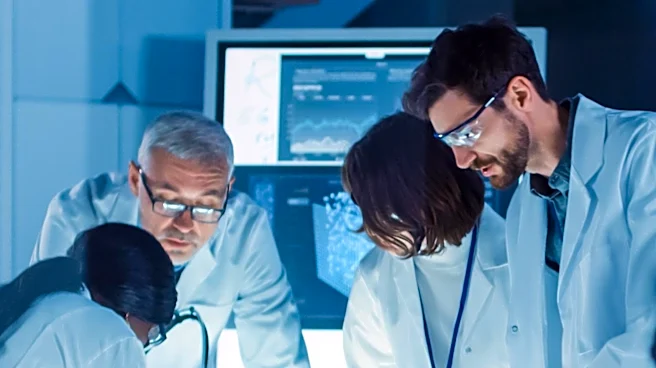
Researchers from the Universities of Hildesheim, Bonn, and Freiburg have discovered how human skeletal muscle responds to resistance exercise at the molecular level. This study, published in Nature Communications, reveals that resistance training activates
a specialized repair system in muscles. This system identifies and removes damaged muscle components while promoting the synthesis of new contractile proteins. The findings could optimize training programs for athletes, improve rehabilitation strategies, and counteract age-related muscle loss. The research involved collecting muscle biopsies from volunteers before and after high-intensity resistance exercise, using proteomics to identify changes in the muscle's contractile apparatus.
Why It's Important?
The study's findings have significant implications for sports science and rehabilitation. By understanding the molecular mechanisms of muscle repair, training programs can be tailored to enhance athletic performance and recovery. This knowledge is crucial for developing strategies to prevent muscle loss in aging populations, potentially reducing healthcare costs associated with age-related muscle degeneration. The research also highlights the importance of resistance training in maintaining muscle health, which is vital for overall physical well-being and longevity.
What's Next?
The researchers plan to incorporate these findings into training strategies for elite athletes and rehabilitation programs for patients. This could lead to more effective exercise regimens that maximize muscle repair and growth. Further studies may explore the application of these insights in clinical settings, potentially benefiting individuals with muscle-wasting conditions. The interdisciplinary approach of this research sets a precedent for future studies in exercise physiology and muscle biology.