
What's Happening?
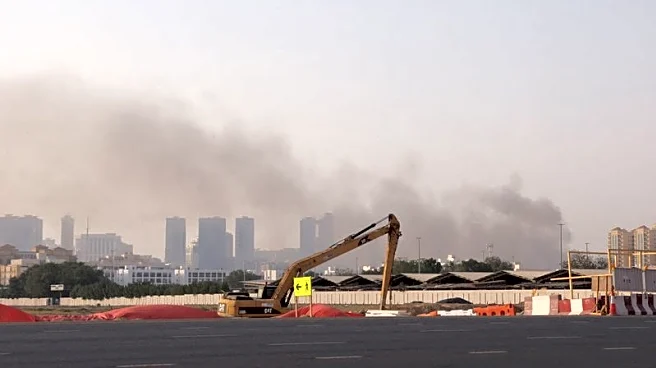
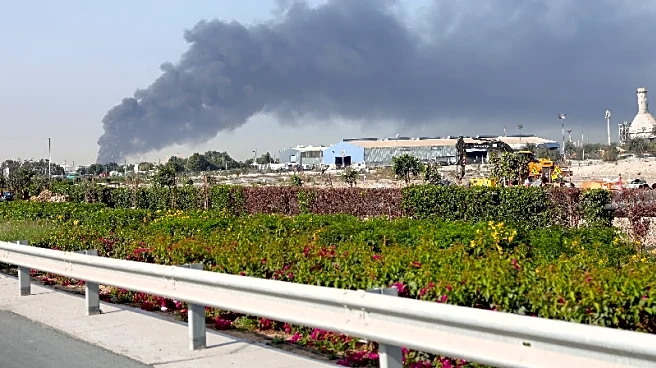
Debris from an intercepted drone has damaged a complex housing the Israeli embassy in Abu Dhabi, causing minor injuries to a woman and her child. The incident is part of a broader pattern of retaliatory strikes following U.S. and Israeli operations against
Iran. The strikes have affected several Gulf cities, including Dubai and Doha, with significant damage reported at key infrastructure sites such as airports and ports. The National Security Council has issued warnings to Israeli citizens abroad, advising increased caution due to the risk of Iranian retaliatory attacks. The situation highlights the vulnerability of civilian and commercial areas in the region amid escalating tensions.
Why It's Important?
The damage to the Israeli embassy complex in Abu Dhabi underscores the expanding reach of the conflict, affecting not only military targets but also civilian and diplomatic sites. This development raises concerns about the safety of international missions and the potential for further escalation in the region. The strikes have disrupted key economic hubs, impacting trade and tourism in the Gulf, which are vital to the region's economy. The situation also poses a diplomatic challenge for the UAE and other Gulf states, balancing their relations with Israel and the broader geopolitical dynamics involving Iran and the U.S.
What's Next?
The immediate focus will be on assessing the damage and ensuring the safety of diplomatic personnel and civilians in affected areas. The UAE and other Gulf states may enhance security measures to protect critical infrastructure and international missions. Diplomatic efforts may intensify to de-escalate tensions and prevent further attacks. The international community, particularly countries with interests in the region, will likely engage in dialogue to address the underlying issues and seek a resolution to the conflict. The situation remains volatile, with potential for further developments depending on the actions of key regional players.