

What's Happening?
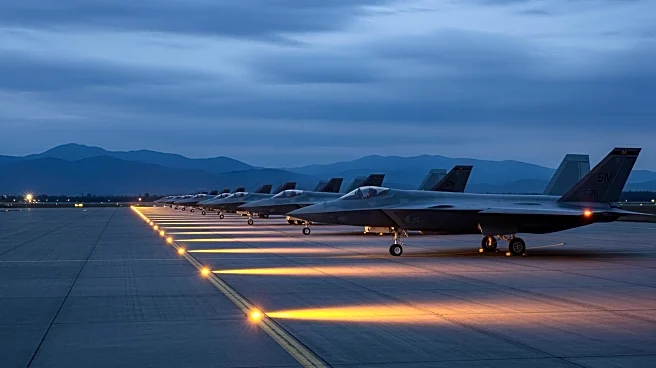
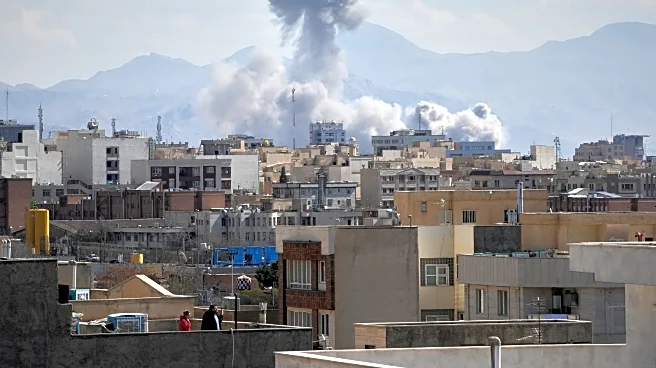
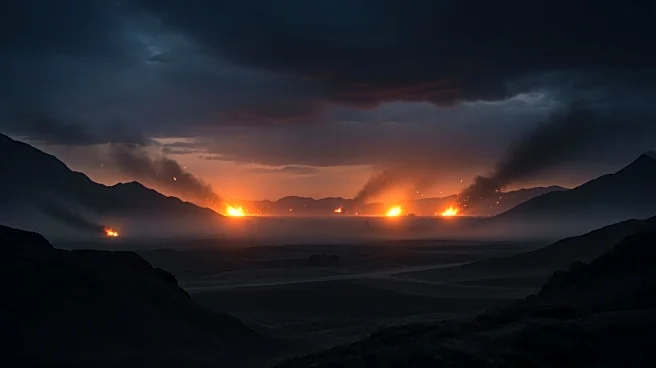
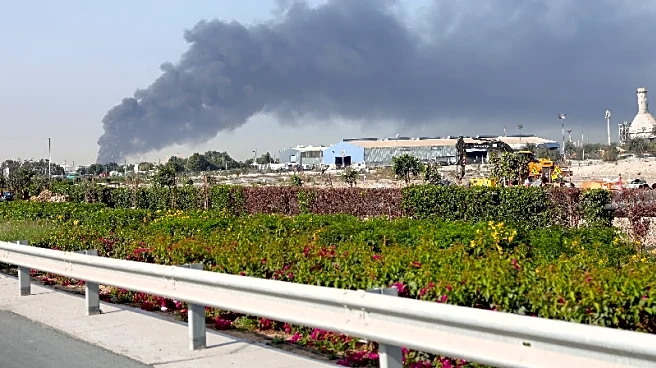
The UK has cited 'collective self-defence' as its rationale for deploying air assets in the Middle East, following Iranian drone and missile strikes on several cities in the region. These strikes are a response to a joint US-Israeli bombing campaign over
Iran. While UK air assets have not directly engaged in strikes on Iran, they are tasked with securing key UK military sites. An RAF Typhoon fighter recently intercepted an Iranian drone heading for Qatar, highlighting the UK's defensive posture in the region.
Why It's Important?
The UK's involvement underscores the complexity of international military alliances and the strategic importance of the Middle East. By supporting US operations and protecting its own interests, the UK is reinforcing its commitment to regional stability and security. This situation highlights the potential for escalation and the need for careful diplomatic and military coordination among allies. The UK's actions may influence its foreign policy and defense strategies, as well as its relationships with other nations involved in the conflict.
What's Next?
The situation in the Middle East remains volatile, with potential for further military engagements or diplomatic efforts to de-escalate tensions. The UK's continued involvement will likely depend on the evolving security landscape and the actions of other regional players. Monitoring developments closely will be crucial for understanding the broader implications for international relations and security.
Beyond the Headlines
This development raises questions about the ethical and legal dimensions of military interventions and the use of advanced weaponry. The long-term impact on regional stability and the potential for escalation into broader conflicts are concerns that need to be addressed. Additionally, the operation may influence public opinion and policy debates regarding military spending and foreign policy priorities.