










What's Happening?
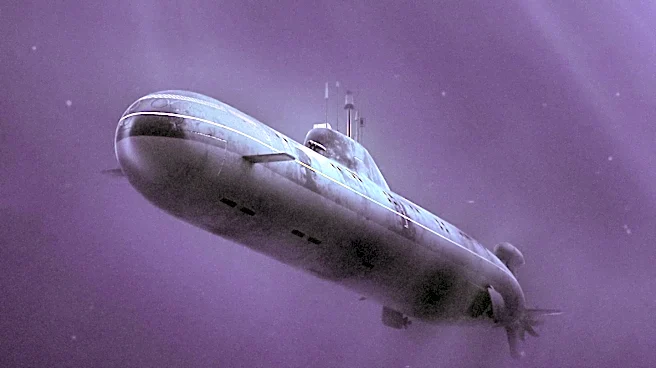
Russia has installed anti-drone cages on its submarines at the Novorossiysk naval base in the Black Sea, according to a recent Western intelligence assessment. This move is seen as a preventive measure against potential Ukrainian drone strikes. Satellite
imagery analyzed by Britain's defense ministry between June 6 and 9 revealed that three Kilo-class submarines were equipped with these cages, and it is expected that a fourth will receive similar protection. The installation of these cages comes as Ukraine has increased its long-range missile and drone strikes, targeting Russian energy sites and other strategic locations. The use of cage armor, typically employed to protect tanks and armored vehicles from drones and shrapnel, is unusual for submarines, highlighting the unique challenges posed by the ongoing conflict.
Why It's Important?
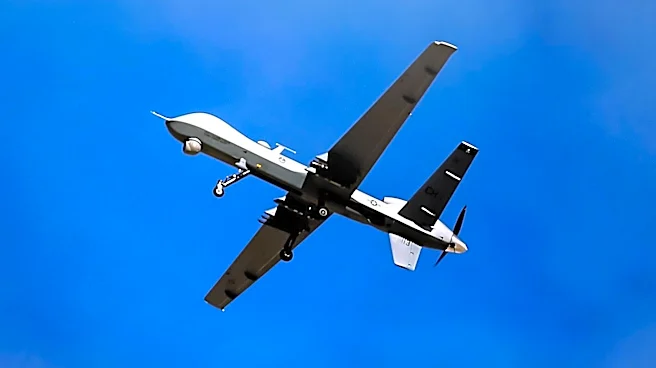
The installation of anti-drone cages on Russian submarines underscores the evolving nature of warfare, where drones play a significant role in military strategy. This development highlights the increasing threat posed by Ukrainian drone capabilities, which have been used to strike targets deep within Russian territory. The move also reflects Russia's efforts to safeguard its naval assets in the Black Sea, a region of strategic importance. The use of such defensive measures could influence future military engagements and the development of counter-drone technologies. Additionally, this escalation in military tactics may impact diplomatic relations and the broader geopolitical landscape, as both Russia and Ukraine continue to adapt to new forms of warfare.
What's Next?
As Ukraine continues to enhance its drone strike capabilities, Russia may further fortify its military assets with similar protective measures. This could lead to an arms race in drone and anti-drone technologies, with both sides seeking to gain a tactical advantage. The international community may respond with increased diplomatic efforts to de-escalate the conflict, though the effectiveness of such measures remains uncertain. Additionally, the ongoing conflict could prompt other nations to reassess their military strategies and investments in drone technology, potentially leading to broader implications for global security and defense policies.