



What's Happening?
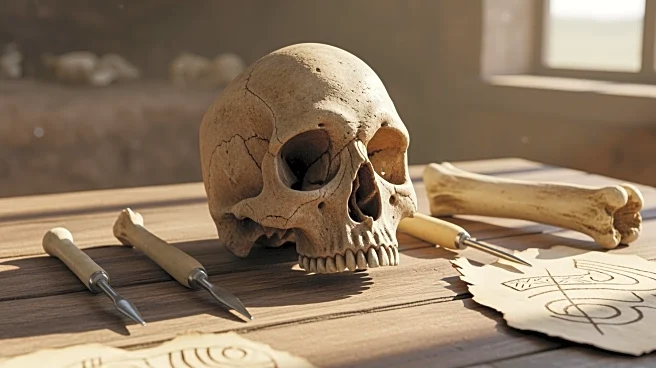
In a remote cave in the Calabrian mountains, researchers have uncovered a 3,700-year-old genetic discovery: a child born from a father-daughter union. This finding, confirmed through DNA analysis, is the earliest known case of such a relationship in prehistoric
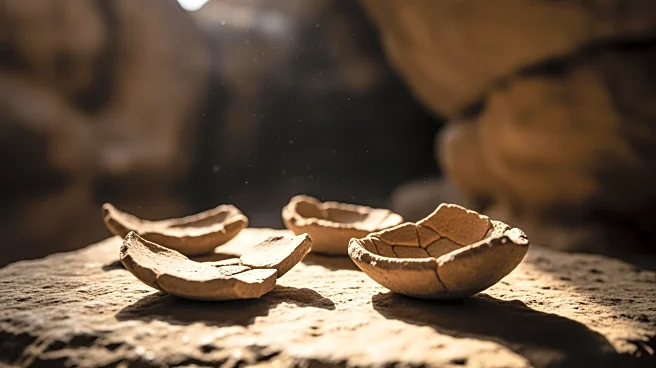
Europe. The cave, Grotta della Monaca, contained remains of 23 individuals, providing insights into ancient family structures and daily life. The study also revealed that the community consumed dairy despite lacking the genetic ability to digest lactose, likely by processing milk into yogurt or cheese.
Why It's Important?
This discovery sheds light on the social and genetic dynamics of ancient European communities. It highlights the complex family structures and cultural practices that existed thousands of years ago. The ability of this community to adapt their diet despite genetic limitations demonstrates early human ingenuity and cultural evolution. The findings contribute to our understanding of human history, migration patterns, and the development of societal norms. This research also emphasizes the importance of interdisciplinary approaches in archaeology, combining genetics, anthropology, and history to reconstruct past human behaviors.
Beyond the Headlines
The study raises questions about the cultural and ethical norms of ancient societies, particularly regarding family relationships and social structures. It also highlights the role of cultural practices in overcoming genetic limitations, offering insights into how early humans adapted to their environments. The research may prompt further exploration into the genetic and cultural evolution of prehistoric populations, potentially revealing more about the interconnectedness of ancient communities across Europe.