
What's Happening?
Senator Gary Peters, a Democrat from Michigan, has requested that the Senate Homeland Security Committee, led by Republican Rand Paul, delay the consideration of President Trump's nominees for the U.S.
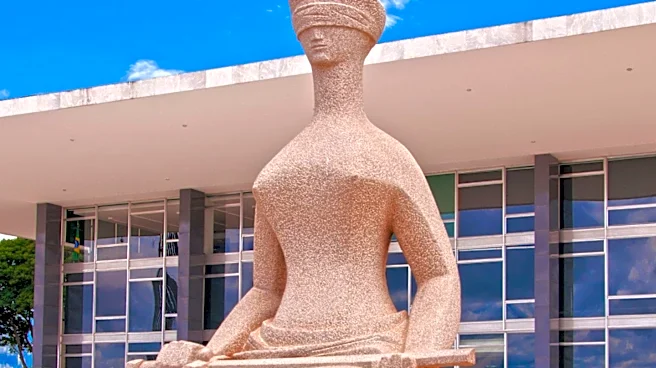
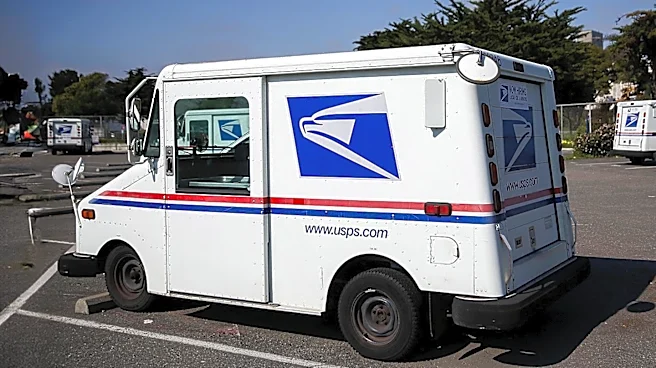
Postal Service (USPS) Board of Governors. Peters argues that the current nominations, which include four Republicans, would create an unprecedented partisan imbalance on the board, which traditionally maintains a bipartisan composition. The USPS Board currently has two Democratic members, one Republican, and one independent, with five vacancies. By law, no more than five members can belong to the same political party. Peters' request follows a Supreme Court decision in Slaughter v. Federal Trade Commission, which removed protections for members of independent boards, potentially allowing for more partisan appointments. The American Postal Workers Union has also expressed concern over the lack of postal or logistics experience among the nominees, planning a national day of action to oppose the nominations.
Why It's Important?
The composition of the USPS Board of Governors is crucial as it influences the direction and policies of the Postal Service, a vital national institution. The potential shift towards a more partisan board could undermine public confidence in its ability to operate impartially and effectively. This development is part of a broader trend under President Trump's administration to consolidate power and influence over independent agencies, as highlighted by recent Supreme Court rulings. The outcome of this nomination process could set a precedent for future appointments to other independent boards, affecting their autonomy and the balance of power between political parties. The situation also raises concerns about the future of postal reform and the financial stability of the USPS, which has been a contentious issue in recent years.
What's Next?
If the Senate proceeds with the current nominations, it could lead to further partisan conflicts and potential legal challenges. The American Postal Workers Union's planned protests may influence public opinion and put pressure on senators to reconsider the nominations. Additionally, Congress may explore legislative options to ensure a more balanced and qualified board, potentially introducing new standards for nominees. The broader implications of the Supreme Court's decision in Slaughter v. FTC may also prompt legislative efforts to redefine the qualifications and protections for members of independent boards, aiming to preserve their independence and effectiveness.
Beyond the Headlines
The ongoing debate over the USPS Board nominations reflects deeper issues regarding the politicization of independent agencies and the balance of power in the federal government. The trend towards more partisan appointments could erode the checks and balances that are essential for democratic governance. This situation also highlights the challenges of maintaining the USPS's operational integrity and financial viability in a rapidly changing economic and technological landscape. The outcome of this process could influence future discussions on postal reform and the role of government in managing essential public services.