






What's Happening?
The California water quality regulator for the Tijuana River sewage crisis, Dave Gibson, executive director of the San Diego Regional Water Quality Control Board, has stated that the Trump Administration's promised expedited expansion of a treatment plant
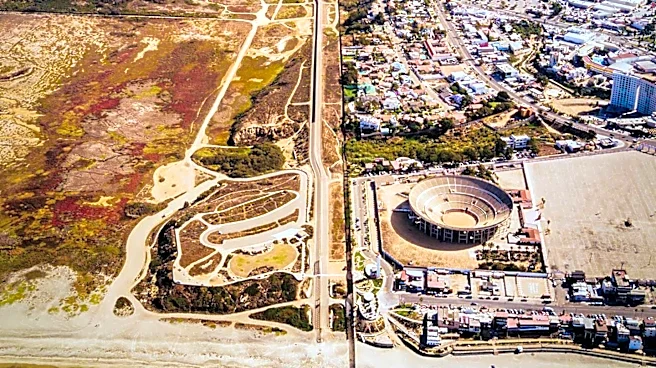
at the U.S.-Mexico border is underfunded by $275 million. The federal International Boundary and Water Commission (IBWC) is reportedly short of funds needed to repair and update the plant, which treats Mexican sewage before discharging it into the Pacific Ocean. The Trump Administration had committed to doubling the plant's capacity by December 31, 2027, as part of a plan to significantly reduce construction time and permanently resolve the Tijuana River sewage crisis. This new funding gap casts doubt on the previously assumed fully funded project. The plant, originally built in the 1990s, serves as a crucial backup for Tijuana's sewage treatment, preventing up to 35 million gallons of sewage daily from entering the Tijuana River, which flows into Imperial Beach. Congressional representatives, including Rep. Scott Peters' chief of staff MaryAnne Pintar, expressed shock, noting previous efforts to secure $310 million in emergency funds for the plant. The total cost for the plant's treatment and expansion is now approaching $1 billion, partly due to the accelerated timeline mandated by President Trump.
Why It's Important?
This funding shortfall directly impacts the environmental health and public safety of communities along the U.S.-Mexico border, particularly in Southern California. The Tijuana River sewage crisis has long been a source of pollution, affecting beaches and marine life. The Trump Administration's commitment to an expedited solution aimed to alleviate these long-standing issues, and any delay or reduction in scope due to underfunding could prolong environmental damage and public health risks. For congressional representatives who have actively sought and secured funding for the plant, this news represents a significant setback and raises questions about the federal government's ability to deliver on its promises. The increased cost, partly attributed to President Trump's demand for a faster completion, highlights the complexities and financial pressures involved in cross-border infrastructure projects. The situation also underscores the ongoing challenges in managing international environmental issues and the need for consistent, adequate funding to address them effectively.
What's Next?
The immediate next steps will likely involve efforts by congressional representatives and local officials to secure the additional $275 million needed for the project. MaryAnne Pintar, chief of staff for Rep. Scott Peters, indicated that the news was a shock, suggesting a renewed push for federal appropriations. The IBWC, which has not yet commented on the shortfall, will likely face increased scrutiny and pressure to provide clarity on its funding status and project timeline. The San Diego Regional Water Quality Control Board will continue to monitor the situation, with Dave Gibson having already communicated the board's expectation for the expanded plant to comply with the Clean Water Act by 2030. The uncertainty surrounding funding could lead to delays in the plant's expansion, potentially pushing back the target completion date of December 31, 2027, and consequently prolonging the Tijuana River sewage crisis. Stakeholders will be looking for a clear plan from federal agencies on how they intend to bridge this funding gap.
Beyond the Headlines
The underfunding of the Tijuana River sewage treatment plant expansion reveals deeper issues concerning the execution of large-scale, binational infrastructure projects and the political will to fully fund environmental commitments. The project's escalating costs, partly driven by an accelerated timeline, highlight the trade-offs between speed and budget in complex engineering endeavors. This situation could set a precedent for future cross-border environmental initiatives, potentially making it harder to secure initial funding if previous commitments are seen as unreliable. Ethically, the continued pollution of the Tijuana River impacts vulnerable communities and ecosystems, raising questions about environmental justice and the responsibility of both nations. Legally, the plant's compliance with the Clean Water Act by 2030 remains a critical benchmark, and any failure to meet this could lead to further legal challenges and penalties. The incident also underscores the persistent challenges in U.S.-Mexico cooperation on shared environmental resources, where political shifts and funding uncertainties can derail long-term solutions.