




What's Happening?
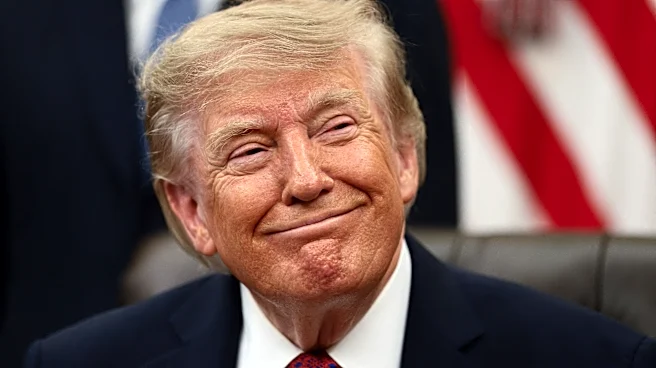
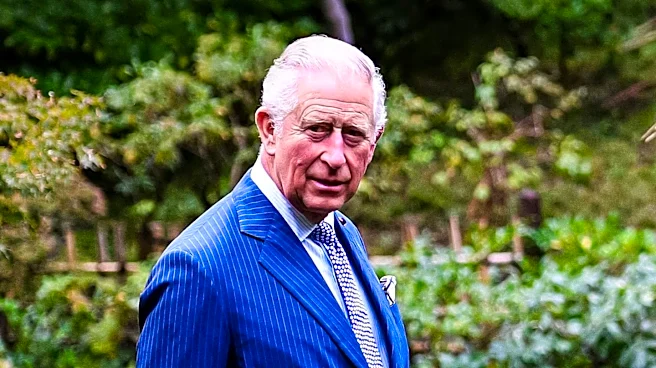
President Trump has shared an edited video clip on his Truth Social platform that depicts King Charles appearing to walk away from a fainting man, seemingly unconcerned. The footage, which dates back over six years to a visit by Charles (then Prince of
Wales) to an Asda distribution center in Bristol, was manipulated to show the royal raising his hands in helplessness before turning away. However, the full, unedited footage reveals that Charles extended his arm to try and catch the worker and remained nearby, visibly concerned, until reassured by his security detail that the individual was fine. The edited clip is part of a montage designed to portray President Trump as 'the people’s president,' contrasting him with other world leaders, including French President Emmanuel Macron, President Joe Biden, and former President Barack Obama, who are also shown in unflattering or edited contexts.
Why It's Important?
This action by President Trump highlights the increasing use of selectively edited or misleading media to shape public perception and political narratives. The deliberate misrepresentation of King Charles's actions serves to elevate President Trump's image while potentially damaging the reputation of a foreign head of state. This practice can erode public trust in media and political discourse, making it difficult for citizens to discern factual information from propaganda. The incident also underscores the power of social media platforms in disseminating such content, influencing public opinion on a broad scale, and potentially impacting international relations, even if subtly.
What's Next?
The dissemination of this edited video by President Trump is likely to continue to fuel discussions about media manipulation and the ethics of political campaigning. While President Trump has previously expressed support for the royal family, this specific action could be seen as a calculated move to appeal to his base by contrasting his perceived empathy with that of other leaders. It may prompt further scrutiny of content shared on social media platforms, particularly by prominent political figures. The incident could also lead to increased efforts by fact-checking organizations to debunk such misleading content, though its impact on public opinion may already be significant.
Beyond the Headlines
The incident reflects a broader trend in contemporary politics where visual media is easily manipulated to create desired narratives, often at the expense of factual accuracy. It raises ethical questions about the responsibility of public figures, especially those with large platforms, to share truthful information. The contrast drawn between President Trump and other leaders, including King Charles, speaks to a strategy of character assassination and self-aggrandizement that can undermine diplomatic relations and foster a climate of distrust. This practice can have long-term implications for how political leaders are perceived globally and the integrity of information in the digital age, potentially normalizing the use of 'deepfakes' or heavily edited content in political discourse.