



What's Happening?
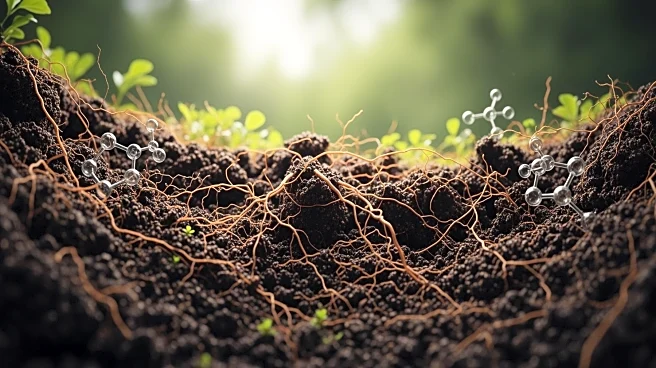
Researchers from the University of Hong Kong (HKU) have discovered that soil is a significant reservoir and amplifier of high-risk antibiotic resistance genes (ARGs). This finding highlights soil's role in the spread of antibiotic resistance, a major
global health threat responsible for over 1.27 million deaths annually. The study, led by Professor Tong Zhang, involved analyzing nearly 4,000 genetic datasets from various environments, including soil, feces, and wastewater, and examining over 8,000 strains of Escherichia coli. The research revealed that the risk posed by soil ARGs has been increasing since 2008, correlating with the growing similarity between soil and human bacterial resistance patterns. This increase is attributed to the transfer of resistance genes between bacteria, emphasizing the need for a comprehensive approach to combat antibiotic resistance.
Why It's Important?
The study underscores the importance of considering environmental sources, such as soil, in the fight against antibiotic resistance. Traditionally, efforts have focused on hospitals and clinics, but this research suggests that a broader 'One Health' strategy is necessary. This approach would involve better waste management to prevent antibiotics and ARGs from entering soils, stricter regulations on antibiotic use in agriculture, and ongoing monitoring of soil environments. By integrating environmental surveillance into public health strategies, the spread of antimicrobial resistance (AMR) can be more effectively controlled, potentially reducing the global health burden associated with resistant infections.
What's Next?
The findings call for immediate action to incorporate environmental factors into AMR control strategies. Policymakers and health organizations may need to develop and implement regulations that address the environmental dimensions of antibiotic resistance. This could include enhancing waste management practices, enforcing stricter controls on antibiotic use in farming, and establishing monitoring systems for soil environments. Such measures could help mitigate the risk of ARGs spreading from soil to human populations, ultimately contributing to a more comprehensive and effective response to the AMR crisis.
Beyond the Headlines
The research highlights a less obvious but critical aspect of antibiotic resistance: the environmental dimension. By identifying soil as a key player in the spread of ARGs, the study challenges the conventional focus on clinical settings and underscores the interconnectedness of human, animal, and environmental health. This perspective aligns with the 'One Health' approach, which advocates for integrated efforts across sectors to address complex health challenges. The study also raises ethical considerations regarding the use of antibiotics in agriculture and the responsibility of industries to manage waste effectively to protect public health.