






What's Happening?
A Long Beach affordable housing charity, Helpful Housing, and its for-profit subsidiary Ocean Structure, run by Rodney Rosenstein, are facing a torrent of accusations regarding a multi-million dollar fraud scheme. Rosenstein is currently in federal custody
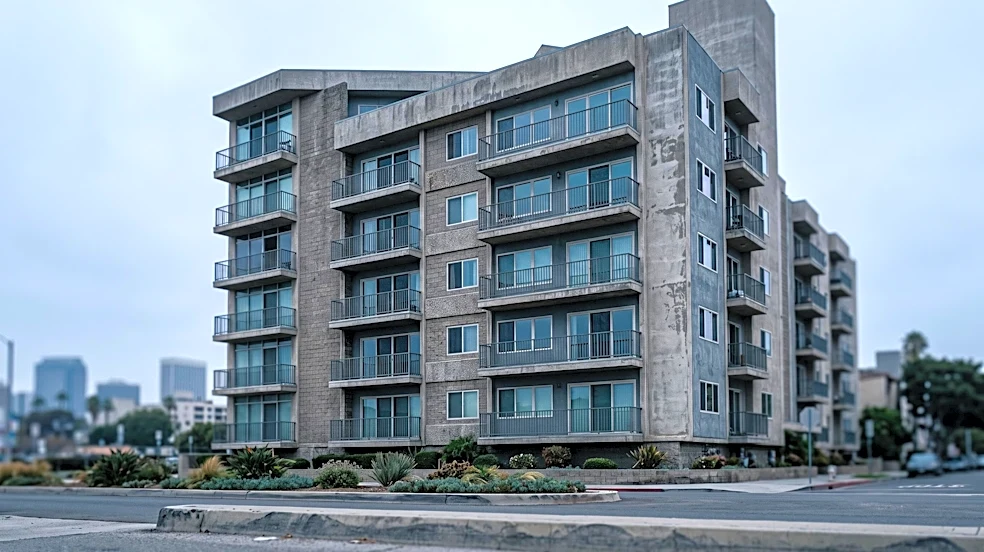
following an indictment in Arizona for allegedly stealing $2.9 million in COVID-relief money and $35 million in bank loans through falsified payroll expenses and staged building occupancies. In Long Beach, similar accusations across 15 residential complexes include defrauding homeless assistance programs, swindling low-income tenants, and overcharging agencies. An attorney, Kimberly Lind, uncovered extensive alleged fraud while pursuing a wage-theft case, finding falsified documents, non-existent tenants, and double-billing of agencies. The city of Long Beach is also suing Rosenstein for missing payments on federal loans, aiming to seize 15 apartment buildings.
Why It's Important?
This alleged fraud scheme has significant implications for affordable housing initiatives and homeless services in Long Beach and potentially beyond. The accusations undermine public trust in charities and government programs designed to assist vulnerable populations. If proven, the diversion of millions of dollars meant for housing the unhoused and low-income individuals represents a severe betrayal of public funds and a direct harm to those in need. It highlights critical vulnerabilities in oversight mechanisms for federal loans and charitable organizations, suggesting a need for more stringent auditing and accountability. The case could lead to a re-evaluation of how cities partner with non-profits for social services and how federal funds are distributed and monitored, potentially impacting the availability and integrity of future affordable housing projects. The alleged exploitation of COVID-relief funds also points to broader issues of fraud during national emergencies.
What's Next?
Rodney Rosenstein will face ongoing legal proceedings related to the federal indictment in Arizona, which could result in significant prison time. In Long Beach, the city's lawsuits against Rosenstein to seize the 15 apartment buildings will proceed, aiming to recover $9.6 million in principal and interest. Further investigations by federal and local authorities into the full extent of the alleged fraud in Long Beach are likely. This could lead to additional charges and the involvement of more agencies. The fate of the tenants currently housed in Helpful Housing and Ocean Structure properties remains uncertain, potentially requiring intervention from the city or other housing providers. The case may also prompt legislative action or policy changes to strengthen oversight of affordable housing programs and prevent similar fraudulent activities in the future.
Beyond the Headlines
The alleged fraud by Helpful Housing exposes a darker side of the affordable housing crisis, where the very systems designed to alleviate suffering can be exploited for personal gain. This situation raises profound ethical questions about the exploitation of vulnerable populations and the integrity of the non-profit sector. It underscores the critical importance of transparency and accountability in organizations that receive public funds and serve marginalized communities. The case could erode public confidence in charitable giving and government-funded social programs, making it harder for legitimate organizations to secure resources. Furthermore, it highlights the systemic challenges in monitoring complex financial transactions within large-scale housing initiatives, revealing how a lack of robust oversight can create opportunities for extensive fraud. The long-term impact could be a more cautious approach to public-private partnerships in social welfare, emphasizing stricter controls and greater public scrutiny.