
What's Happening?
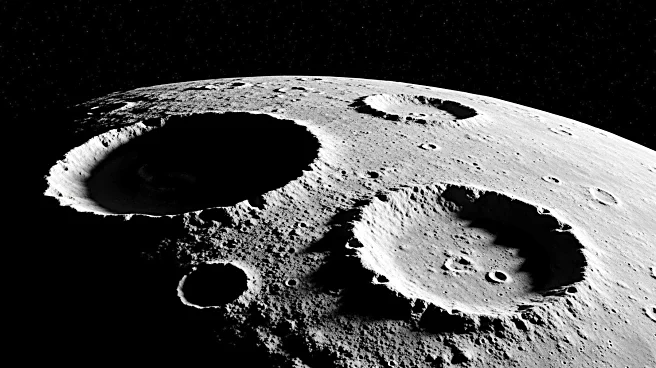
On January 25, 2026, the Moon will be in its First Quarter phase, providing an excellent opportunity for stargazers to explore its surface features. The Eudoxus Crater, located in the northeastern quadrant
of the Moon, is a prominent feature visible during this phase. Named after the ancient Greek astronomer Eudoxus of Cnidus, the crater is situated above the Mare Serenitatis, a solidified lava plain. The First Quarter Moon offers a unique view of the crater's dramatic shadows, highlighting its depth and structure. This phase is ideal for observing the Moon's surface details, as the angle of sunlight casts long shadows that accentuate the topography.
Why It's Important?
Observing the Moon during its First Quarter phase provides valuable insights into its geological history and surface composition. The visibility of craters like Eudoxus allows astronomers and enthusiasts to study the impact history and volcanic activity on the Moon. These observations contribute to our understanding of lunar formation and evolution, which is essential for future lunar exploration missions. Additionally, public engagement in astronomy through events like this fosters interest in science and space exploration, encouraging educational pursuits and inspiring the next generation of scientists.