




What's Happening?
U.S. Senator Mark Warner, alongside Senator Tim Kaine, has urged the Department of Homeland Security's inspector general to investigate whether federal immigration operations are misusing surveillance tools. This call for examination comes in the context
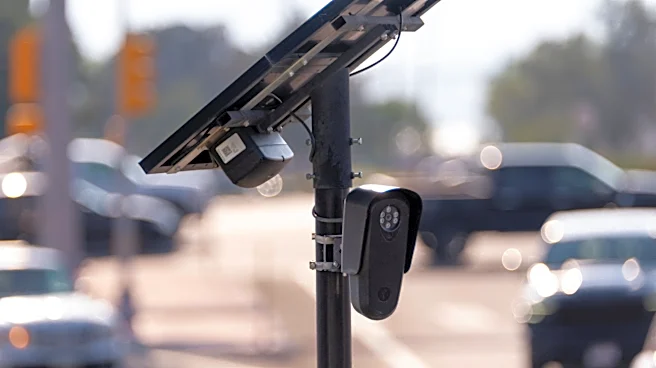
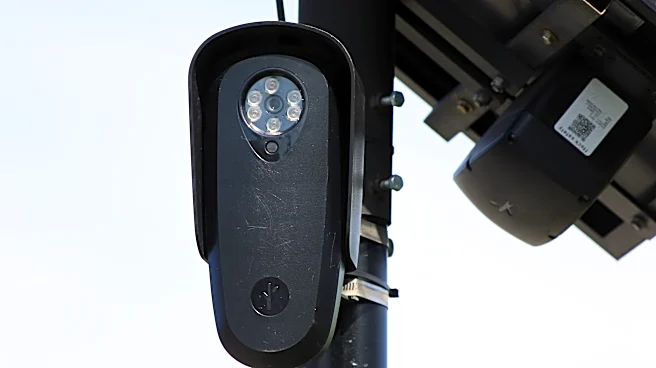
of local surveillance practices, specifically concerning Alexandria, Virginia's use of Flock cameras. While Alexandria's public license plate reader page now lists 161 Virginia agencies that can search its cameras, no federal agencies appear on this list. The concern raised by Senators Warner and Kaine is whether Virginia agencies might be conducting searches on behalf of federal immigration operations, thereby circumventing state laws that prohibit sharing license plate data with federal, out-of-state, private, or commercial databases. Virginia law explicitly allows sharing with other Virginia agencies only for defined purposes such as criminal investigations with reasonable suspicion, missing persons, human trafficking, outstanding warrants, and stolen vehicles or plates. Willful violation of these state laws is classified as a Class 1 misdemeanor.
Why It's Important?
This inquiry is important because it highlights a critical tension between local and federal law enforcement practices and raises significant civil liberties concerns. The potential for state agencies to act as intermediaries for federal immigration operations in accessing surveillance data could undermine state-level protections designed to limit federal overreach. If such practices are confirmed, it could erode public trust in local law enforcement and surveillance technologies, as residents might perceive their data being used for purposes beyond what is legally permitted or publicly disclosed. Furthermore, it could set a precedent for other states and localities, potentially leading to a patchwork of surveillance regulations that are difficult to enforce and navigate. The outcome of this investigation could influence future legislation regarding data sharing between different levels of government and impact the privacy rights of individuals across the U.S., particularly in communities with large immigrant populations.
What's Next?
The Department of Homeland Security's inspector general is expected to conduct an examination into the allegations of misuse of surveillance tools by federal immigration operations. This investigation will likely involve scrutinizing data-sharing agreements and practices between Virginia agencies and federal entities. Depending on the findings, there could be calls for stricter enforcement of existing state laws, the implementation of new regulations to prevent such circumvention, or even federal policy changes regarding immigration enforcement tactics. Local jurisdictions, like Alexandria, may face increased pressure to enhance transparency regarding their surveillance data-sharing partners and audit processes. Civil liberties organizations, such as the American Civil Liberties Union, which actively campaigns against license plate readers, will likely monitor the situation closely and advocate for stronger privacy protections. The results could also prompt a broader national discussion on the balance between security measures and individual privacy rights in the digital age.
Beyond the Headlines
Beyond the immediate legal and policy implications, this situation touches upon deeper ethical and societal questions regarding surveillance in a democratic society. The use of technologies like license plate readers, while touted for their crime-fighting potential, also carries the risk of pervasive monitoring and the erosion of privacy. The concern that state agencies might be indirectly facilitating federal immigration enforcement raises questions about the role of local governments in national immigration policies and the potential for 'sanctuary' principles to be undermined through technological means. This could exacerbate distrust between immigrant communities and law enforcement, making individuals less likely to report crimes or cooperate with authorities. The debate also highlights the ongoing challenge of regulating rapidly evolving surveillance technologies to ensure they are used responsibly and in accordance with constitutional rights, rather than becoming tools for unchecked government power. The outcome could influence public perception of smart city initiatives and the broader acceptance of surveillance infrastructure.