




What's Happening?
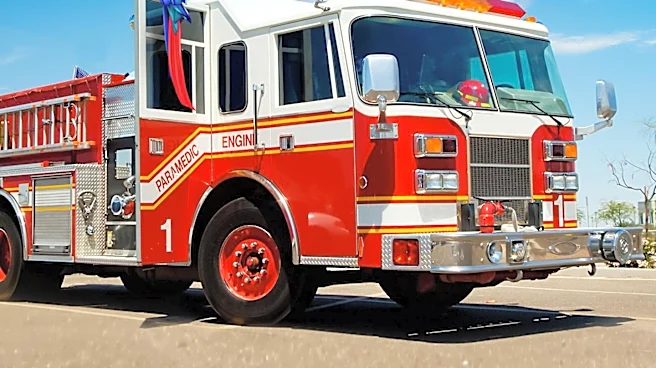
The Folsom Fire Department has reinstated Engine 39 at Station 39, significantly improving the city's emergency response capabilities. This engine was temporarily suspended last October due to budget constraints. Battalion Chief Nick Lawlor emphasized
that bringing Engine 39 back enhances safety for residents and visitors, and makes the department's operations more effective and safer. The decision to suspend one of the department's five fire engines was made by city leaders due to budget restraints. To resolve this, labor representatives, elected officials, and city leaders collaborated to implement a single-role EMT and paramedic program. This program has led to the hiring of 14 single-role EMTs and paramedics who will staff two of the city's three ambulances, focusing solely on medical aid without fire suppression duties.
Why It's Important?
The restoration of Engine 39 is a critical development for Folsom, directly impacting public safety and emergency response times. The temporary suspension of a fire engine due to budget constraints underscores the financial pressures faced by many municipal fire departments across the U.S. The innovative solution of implementing a single-role EMT and paramedic program demonstrates a strategic approach to resource allocation. By hiring personnel dedicated solely to medical aid, the department can streamline its hiring process, access a larger applicant pool, and achieve cost savings, which in turn allowed for the return of the fire engine. This model ensures that essential medical services are maintained while also restoring full fire suppression capabilities, particularly benefiting areas like Empire Ranch and enhancing regional response efforts with neighboring El Dorado County.
What's Next?
The Folsom Fire Department will continue to integrate the newly hired single-role EMTs and paramedics into its operations, ensuring seamless coordination between medical and fire suppression teams. The department will likely monitor the effectiveness of this new program in terms of response times, cost efficiency, and overall public safety outcomes. There is also an opportunity for the single-role personnel to advance and become firefighters in the future, providing a career pathway within the department. City leaders and the fire department will need to maintain ongoing communication and collaboration to ensure sustained funding and resource allocation, preventing future service reductions. The enhanced regional response capabilities will also necessitate continued coordination with neighboring jurisdictions.
Beyond the Headlines
The Folsom Fire Department's experience highlights a growing trend in U.S. emergency services: the need for flexible and innovative staffing models to address evolving community needs and budgetary realities. The distinction between fire suppression and medical response roles, as seen with the single-role EMTs, reflects a recognition that a significant portion of emergency calls are medical in nature. This specialization can lead to more efficient use of resources and potentially better patient outcomes. However, it also raises questions about the traditional role of firefighters as all-hazards responders and the potential for skill degradation if roles become too siloed. The Folsom model could serve as a blueprint for other communities grappling with similar challenges, demonstrating how strategic workforce planning can maintain and even enhance public safety services despite financial limitations.