
What's Happening?
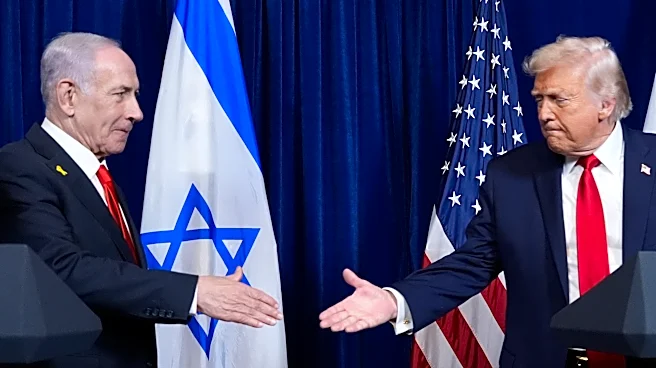
President Trump has called for an immediate ceasefire between Iran and Israel following a series of military exchanges that threatened to disrupt a fragile two-month truce. The conflict intensified with
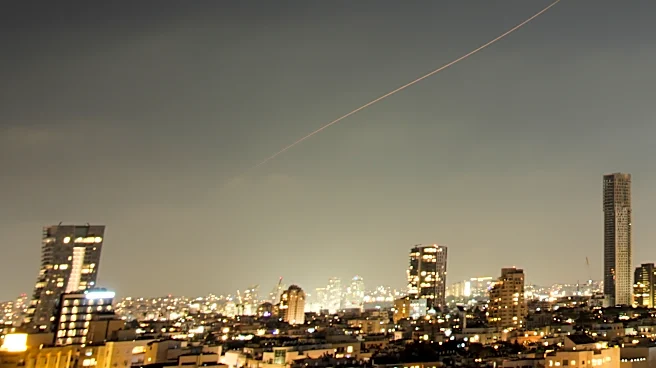
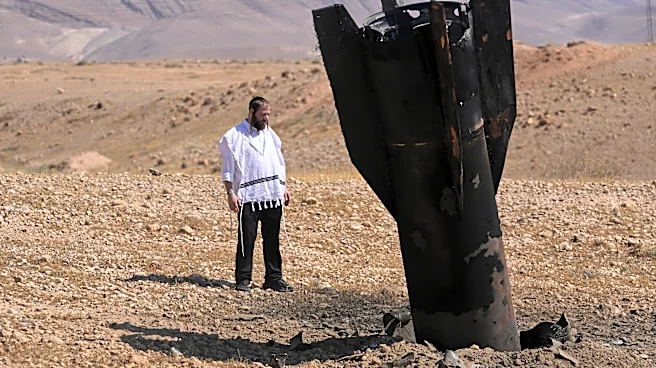
Iran launching ballistic missiles at Israel, which responded with airstrikes on Iranian targets. Both nations have agreed to halt their attacks temporarily, but tensions remain high, particularly over the situation in Lebanon. Iran's military has warned of severe retaliation if hostilities continue, while Israel insists on maintaining its right to self-defense. The recent escalation follows Israel's targeted strike on Hezbollah in Lebanon, which Iran supports. The situation has already resulted in significant casualties and displacement, affecting regional stability and global economic conditions.
Why It's Important?
The renewed hostilities between Iran and Israel have significant implications for Middle Eastern stability and global economic conditions. The conflict threatens to disrupt energy markets, as seen with the recent spike in oil prices. The involvement of regional actors like Hezbollah and the Houthis further complicates the situation, potentially leading to broader regional conflict. The U.S., under President Trump's leadership, plays a crucial role in mediating the ceasefire, but the situation remains volatile. The conflict's resolution or escalation could impact U.S. foreign policy and its relations with Middle Eastern allies, influencing global diplomatic and economic landscapes.
What's Next?
The immediate future involves monitoring the ceasefire's stability and the potential for renewed negotiations. President Trump has indicated ongoing efforts to broker a peace deal, though challenges remain, particularly with Iran's conditions involving Lebanon. Israel's political dynamics, including Prime Minister Netanyahu's stance, will also influence the conflict's trajectory. The international community, including the U.S., will likely continue diplomatic efforts to prevent further escalation. However, the potential for renewed conflict remains, especially if provocations occur or if the ceasefire terms are violated.
Beyond the Headlines
The conflict highlights the complex geopolitical dynamics in the Middle East, where historical animosities and strategic interests intersect. The situation underscores the challenges of achieving lasting peace in a region marked by deep-seated rivalries and external influences. The role of non-state actors like Hezbollah and the Houthis adds layers of complexity, as their actions can significantly impact state-level negotiations. The conflict also raises questions about the effectiveness of international mediation and the potential need for new diplomatic approaches to address underlying issues.