







What's Happening?
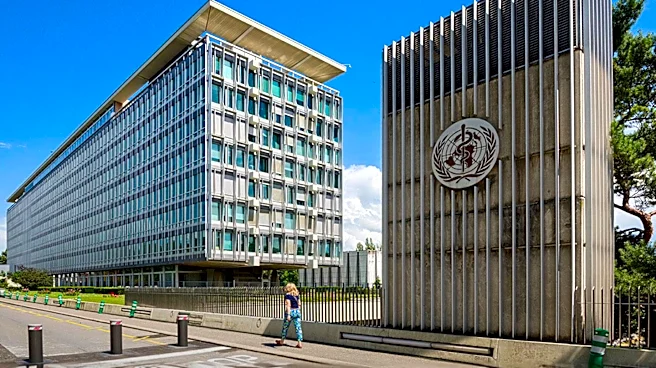
Countries within the World Health Organization (WHO) African Region are convening in Lomé to address the critical role of stronger Primary Health Care (PHC) in accelerating progress towards Universal Health Coverage (UHC). The meeting, commencing tomorrow,
will bring together representatives from across the region to explore how enhanced PHC can deliver quality, integrated, and continuous care closer to communities. The discussions will draw upon existing evidence and country-specific experiences to identify practical priorities for action. This initiative underscores the WHO's commitment to ensuring that essential health services are accessible to all, with PHC serving as the foundational element of a robust health system. The focus will be on strategies that can effectively bridge gaps in healthcare access and improve health outcomes across the diverse populations of the African continent.
Why It's Important?
While this event is focused on the WHO African Region, its implications for global health strategies, including those that influence U.S. foreign aid and public health initiatives, are significant. A stronger PHC system in Africa can contribute to global health security by improving disease surveillance and response capabilities, which is crucial in an interconnected world where infectious diseases can spread rapidly across borders. For the U.S., supporting such initiatives aligns with its broader foreign policy goals of promoting stability and development, as healthy populations are more productive and resilient. Furthermore, lessons learned from strengthening PHC in diverse settings can inform and enhance U.S. domestic health policies, particularly in addressing health disparities and improving access to care in underserved communities. The emphasis on evidence-based approaches and country experiences provides valuable insights into effective strategies for health system strengthening that could be adapted or supported by international partners.
What's Next?
The discussions in Lomé are expected to culminate in the identification of practical priorities for action to strengthen Primary Health Care across the WHO African Region. These priorities will likely guide future policy development, resource allocation, and implementation strategies for member states. Following the meeting, countries will be tasked with integrating these recommendations into their national health plans. For international partners, including the U.S., the outcomes of this gathering could influence funding decisions and collaborative projects aimed at supporting health system strengthening in Africa. We can anticipate a renewed focus on investments in community health workers, essential medicines, and basic health infrastructure. The WHO African Region will likely monitor the progress of these initiatives, with subsequent reports and meetings to assess the impact of the adopted strategies on Universal Health Coverage.
Beyond the Headlines
The push for stronger Primary Health Care in the WHO African Region highlights a fundamental shift in global health paradigms, moving away from disease-specific interventions towards a more holistic, people-centered approach. This emphasis on PHC recognizes that health is not merely the absence of disease but a state of complete physical, mental, and social well-being, deeply intertwined with social determinants like poverty, education, and environmental factors. For the U.S., this broader perspective can inform its global health engagement, encouraging more integrated and sustainable development initiatives rather than fragmented aid programs. The focus on local ownership and country experiences also underscores the importance of culturally sensitive and context-specific solutions, a lesson that can be applied to domestic health challenges as well. Ultimately, strengthening PHC is an investment in human capital and resilience, fostering healthier societies that are better equipped to face future health crises and achieve sustainable development goals.