




What's Happening?
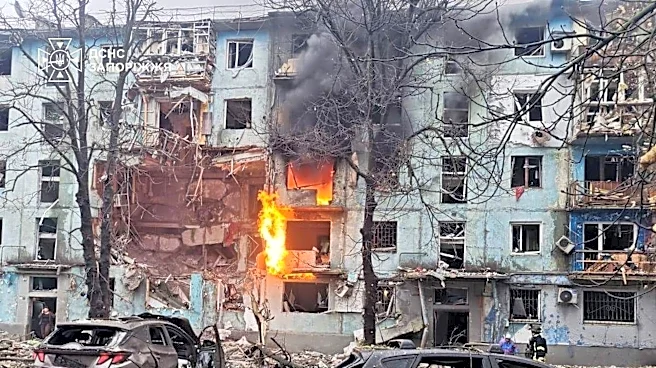
Ukrainian long-range strikes have substantially impacted Russia's oil refining capabilities, with estimates indicating that between 20% and 35% of Russia's refining capacity may be offline. The Ministry of Defense of Ukraine reports that these attacks
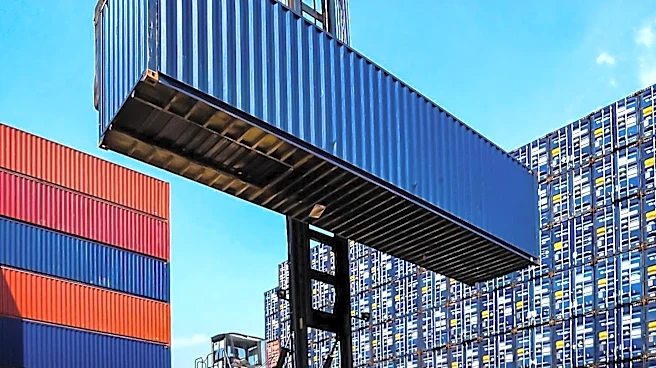
are part of a systematic campaign targeting various components of Russia's oil production and supply chain, rather than isolated incidents. This disruption has led to Russia, one of the world's largest oil producers, importing gasoline by sea from countries such as Turkey, Morocco, and Egypt to meet domestic demand. In a single week, Ukrainian attacks reportedly disrupted operations at nine of Russia's 35 largest oil refineries, causing actual crude oil processing to fall by approximately 30%, or 200,000 tonnes per day. The strikes have also affected major oil refineries, storage facilities, pumping stations, and export terminals, including the port of Ust-Luga, a critical hub for Russia's maritime oil exports.
Why It's Important?
The sustained disruption to Russia's oil refining capacity has significant implications for its economy and military logistics. Russia heavily relies on energy exports to finance its economy and military operations. The inability to refine its own crude oil into finished products like gasoline and diesel forces Russia to seek these fuels abroad, incurring additional costs and logistical challenges. This situation highlights the vulnerability of Russia's energy infrastructure to targeted attacks, demonstrating that possessing crude oil reserves does not guarantee a stable supply of refined fuels without functioning processing facilities. The campaign aims to increase the financial burden on Russia, making it more expensive and difficult to sustain its war efforts and maintain domestic market stability. Furthermore, the damage to complex secondary processing units at refineries, which can take six to eight months to repair, suggests that the impact of these strikes will be long-lasting.
What's Next?
The ongoing Ukrainian campaign is expected to continue exerting pressure on Russia's oil industry, potentially leading to further disruptions in domestic fuel supply and export capabilities. Russia will likely continue to seek alternative sources for refined fuels and invest in enhanced protection for its remaining oil infrastructure. The cumulative effect of these strikes, including increased repair costs, logistical reconfigurations, and the need for fuel imports, will likely continue to strain Russia's budget and operational capacity. The effectiveness of Western sanctions and price caps, which have struggled to limit Russian oil earnings due to the use of a 'shadow fleet' of tankers, may be indirectly bolstered by these physical disruptions, as Russia faces challenges in both production and export. The long repair times for specialized refinery equipment suggest that even if attacks cease, Russia's refining capacity will remain diminished for several months.
Beyond the Headlines
Beyond the immediate economic and military impacts, these strikes highlight a strategic shift in modern warfare, where critical infrastructure becomes a primary target to undermine an adversary's ability to sustain conflict. The reliance on long-range drone attacks demonstrates an evolving tactical approach to asymmetric warfare, forcing Russia to divert resources to defense and repair rather than offensive operations. This campaign also exposes the interconnectedness of global energy markets, as disruptions in one major producer can create ripple effects, influencing international fuel prices and supply chains. The emergence of a 'shadow fleet' of non-Western tankers, including those from Sierra Leone and Cameroon, to bypass sanctions also points to the complex and adaptive nature of global energy trade in times of geopolitical conflict, raising questions about international maritime regulations and enforcement.