








What's Happening?
Turkey and Egypt have entered into a $350 million defense agreement aimed at bolstering Egypt's military capabilities and fostering closer operational ties between the two nations. The agreement was signed by Turkey's state-owned Mechanical and Chemical
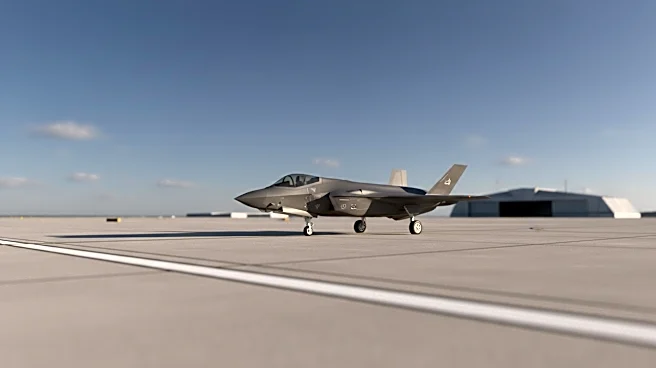
Industry Corporation (MKE) and Egypt's Ministry of Defence during Turkish President Recep Tayyip Erdogan's visit to Cairo in February 2026. Under the terms of the deal, MKE will supply Egypt with the Tolga short-range air-defense system, valued at $130 million, which is designed to detect and counter drones and other low-flying threats. The remaining $220 million will be used to establish a joint Egyptian-Turkish company and local factories to produce artillery ammunition and rounds for the Egyptian Armed Forces and export markets. Additionally, Egypt has been approved to participate in Turkey's KAAN fifth-generation fighter program, potentially allowing Cairo to develop a stealth capability. The partnership is further strengthened by joint military exercises, such as the Anatolian Eagle and Golden Eagle 2026, which involve Egyptian and Turkish forces.
Why It's Important?
This defense pact signifies a strategic shift in the military dynamics of North Africa, as Egypt seeks to maintain its status as the region's most powerful military. The agreement not only enhances Egypt's defense capabilities but also positions it as a potential hub for Turkish military equipment manufacturing and export. The collaboration could lead to significant technology transfers and joint development projects, particularly in the realm of stealth fighters, which Egypt currently lacks. This development is crucial as regional military spending continues to rise, with Algeria and Morocco also seeking to modernize their forces. The partnership between Turkey and Egypt could alter the balance of power in the region, potentially impacting U.S. and other international defense relationships.
What's Next?
The next steps involve the implementation of the defense agreement, including the establishment of joint manufacturing facilities and the commencement of technology transfers related to the KAAN fighter program. Both countries are likely to continue their joint military exercises to enhance operational coordination. The evolving partnership may prompt reactions from other regional powers, such as Algeria and Morocco, who may seek to bolster their own military capabilities in response. Additionally, the U.S. and other international stakeholders will be monitoring the situation closely, as it could influence their defense strategies and alliances in the region.