




What's Happening?
Residents in the Big Bend region of West Texas are expressing significant concerns over the rapid proliferation of 'man camps' established to house workers for border wall construction. These facilities, designed to accommodate hundreds of workers, have
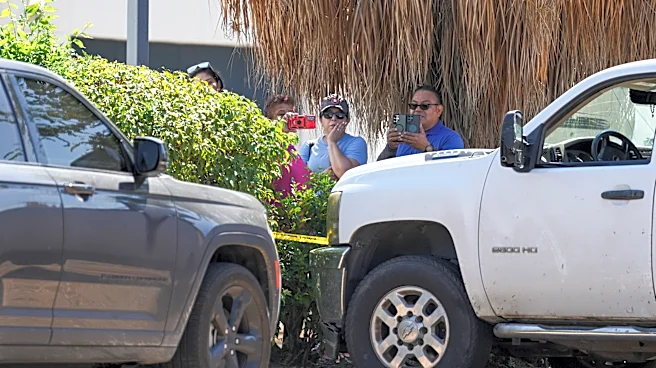
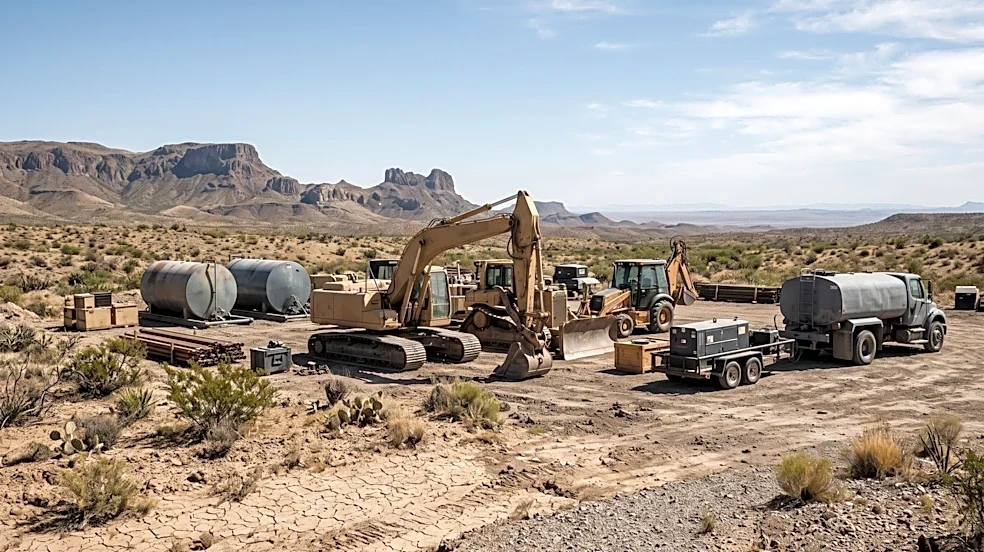
appeared with what locals describe as minimal state oversight. Emily Greenwood, a resident of Terlingua Ranch, noted the transformation of land near her property into a sprawling facility with RVs, fuel tanks, and heavy machinery, raising fears of health issues like Valley Fever due to dust. Jennifer Simon and Micah Voiers, anti-wall advocates, have filed multiple complaints with the Texas Commission on Environmental Quality (TCEQ) regarding unpermitted land clearing, excessive dust, and water management issues. The TCEQ's response has been inconsistent, with some investigations dropped due to federal waivers, while others are ongoing. Contractors, including Barnard Construction and Southwest Valley Constructors, have reportedly claimed exemption from state environmental regulations due to these federal waivers, leading to a lack of transparency and enforcement.
Why It's Important?
The situation in West Texas highlights a critical conflict between federal border security initiatives and state environmental and public health regulations. The alleged circumvention of state permitting processes by border wall contractors, under the umbrella of federal waivers, raises questions about accountability and the protection of local communities and natural resources. The Big Bend region, characterized by its rugged landscape and low population density, faces unique challenges in accommodating large-scale industrial operations. The influx of hundreds of workers and associated infrastructure places a strain on scarce resources like water and emergency services, as noted by Kayse Muratori, a regional 911 address coordinator. The lack of clear boundaries for federal waivers also creates ambiguity, making it difficult for state agencies like the TCEQ to enforce their own rules, potentially setting a precedent for future federal projects to bypass local environmental protections across the U.S.
What's Next?
The legal battle over border wall construction and the use of federal regulatory waivers is ongoing, with the Trump administration indicating a potential appeal to the U.S. Supreme Court. The TCEQ is currently investigating several complaints, and the office of Democratic state Senator César Blanco is actively working to understand the agency's authority and enforcement capabilities. Locals like Simon and Voiers plan to continue their advocacy, emphasizing the importance of community involvement in holding contractors and regulatory bodies accountable. The outcome of these investigations and legal challenges will determine the extent to which state environmental laws can be enforced on federally-backed projects and could influence future policy regarding federal waivers and their geographic scope. The community also awaits clarification on whether the TCEQ will take stronger enforcement actions against contractors operating without proper permits.
Beyond the Headlines
This issue extends beyond immediate environmental and health concerns, touching upon fundamental questions of states' rights and federal overreach. The perceived sidelining of the TCEQ, the second-largest environmental agency in the U.S., by federal directives challenges the long-held principle of state sovereignty, particularly in Texas where state leaders have historically championed such rights. The ambiguity surrounding the geographic application of federal waivers creates a 'gray area' where state laws may or may not apply, leading to inconsistent enforcement and a lack of clarity for all stakeholders. This situation could lead to broader discussions about the balance of power between federal and state governments in managing large-scale infrastructure projects, especially those with significant environmental and social impacts. The lack of transparency in the process further erodes public trust and underscores the need for clearer guidelines and accountability mechanisms in such projects.