
What's Happening?
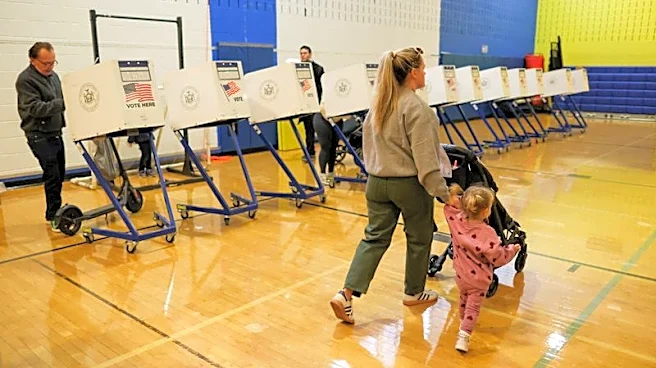
Ohio voters will decide on Issue 3, a proposed amendment to the state constitution that would mandate photo identification for in-person voting. This measure, supported by Republicans, aims to enshrine
the existing photo ID requirement, which was enacted in 2023 under Governor Mike DeWine. Democrats and voting rights advocates oppose Issue 3, arguing that the current system is secure, voter fraud is rare, and the amendment would unnecessarily restrict voting access. Critics also contend that embedding specific ID requirements into the constitution would make it harder to adapt to future technological advancements or changes in acceptable identification forms, potentially excluding documents like county-issued veteran IDs or digital IDs. The debate in Ohio mirrors broader national discussions on election integrity, with President Trump's administration advocating for stricter voter ID laws and a national approach to election administration, despite the U.S. Constitution granting states primary authority over elections. The Ohio Republican Party is actively campaigning for Issue 3, linking it to national efforts to strengthen election security.
Why It's Important?
The outcome of Ohio's Issue 3 is significant for several reasons. Firstly, it represents a key battleground in the ongoing national debate over voter access versus election security. If passed, it would constitutionally embed photo ID requirements, making them more difficult to challenge or change in the future, unlike statutory laws. This could set a precedent for other states considering similar constitutional amendments. Secondly, the measure highlights the partisan divide on voting rights, with Republicans generally supporting stricter ID laws to prevent fraud and Democrats arguing such laws disenfranchise eligible voters, particularly minorities, seniors, and low-income individuals. The emphasis on voter ID laws by the Trump administration and its allies underscores a broader push for uniform, stricter election rules across the country, potentially influencing federal legislative efforts like the SAVE America Act. The debate also brings to light the varying state-level approaches to election administration, creating a patchwork of rules that can lead to confusion and legal challenges.
What's Next?
If Issue 3 passes, Ohio's photo ID requirement for in-person voting will be permanently enshrined in the state constitution, making it significantly more challenging to alter or repeal. This would solidify Ohio's position among the 36 states requiring some form of voter ID. The focus will then shift to the implementation and potential legal challenges to the constitutional amendment, particularly regarding its impact on voter access and the types of identification deemed acceptable. Conversely, if Issue 3 fails, the existing statutory photo ID law would remain in effect, but its constitutional protection would not be secured, leaving it vulnerable to future legislative changes or court challenges. The outcome in Ohio could also influence similar ballot initiatives in other states, such as California, Colorado, and Nevada, where citizen groups are pushing for voter ID measures. The broader national conversation on election security and voter ID laws is expected to continue, with potential federal legislative proposals like the SAVE America Act remaining a point of contention between political parties.
Beyond the Headlines
The debate surrounding Issue 3 in Ohio extends beyond immediate election mechanics, touching upon fundamental questions of democratic participation and trust in electoral processes. Critics argue that embedding specific ID requirements in the constitution could stifle future innovation in voting technology, such as digital IDs, and disproportionately affect marginalized communities who may face barriers in obtaining approved photo identification. This raises ethical concerns about equitable access to the ballot box and the potential for voter suppression. Furthermore, the politicization of election security measures, with strong partisan backing for and against Issue 3, reflects a deeper societal polarization regarding the integrity of elections. The push to constitutionalize voter ID laws also highlights a tension between state autonomy in election administration and calls for national uniformity, potentially leading to ongoing legal battles and public discourse about the balance of power in safeguarding democratic processes. The long-term implications could include shifts in voter demographics and participation rates, depending on how these laws are perceived and implemented.